Tanzania and Uganda are stepping into a new era of economic cooperation, with plans to begin exporting Ugandan crude oil through the East African Crude Oil Pipeline (EACOP) in July 2026. Leaders from both countries say this historic project will ignite a wave of major infrastructure, energy, and transport developments, positioning the region for unprecedented growth.
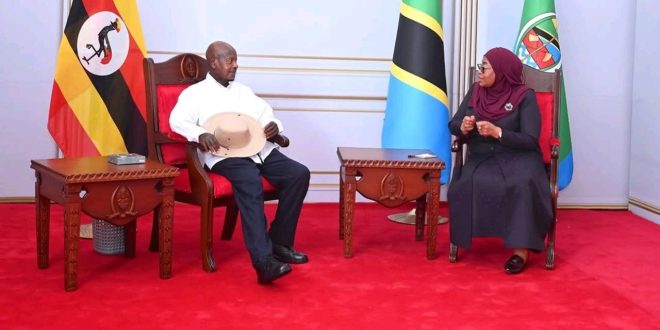
President Samia Suluhu Hassan welcomed Ugandan President Yoweri Museveni to State House in Dar es Salaam, highlighting that the oil shipment is part of a larger vision to deepen long-term bilateral relations. She described the project as a cornerstone for future collaboration, extending beyond energy to trade, logistics, and regional integration.
The two leaders focused on key energy projects, including a natural gas pipeline from Tanzania to Uganda and a refined petroleum pipeline from Uganda to Tanga. President Hassan said the EACOP project has advanced significantly, with the first tanker expected to depart Tanga in July, signaling a major operational milestone for East Africa’s energy sector.
Port infrastructure was another priority. President Hassan outlined plans to expand Dar es Salaam, Tanga, and Mtwara ports to handle increasing trade flows. Investments in these ports aim to improve efficiency, reduce bottlenecks, and support the growing demand for energy exports and regional commerce.
Rail connectivity was also discussed, including a proposed railway linking Tanga to Musoma, which would connect cargo to Uganda via Lake Victoria. Tanzania briefed Uganda on progress with the standard gauge railway from Isaka to Rusaunga, and Uganda plans to extend the line to Murongo, further integrating transport networks and reducing logistical costs.
The leaders addressed remaining trade barriers, acknowledging that some operational challenges persist despite significant growth in bilateral commerce. Beyond economic matters, they discussed regional diplomacy and security. President Hassan praised Uganda for stepping back from the UN Security Council race, paving the way for Tanzania’s representation, while promising support for Uganda’s ambitions in the African Union.
President Museveni emphasized that Africa’s growth depends on unity, linking economic development with strategic security. He called on nations to coordinate industrial and trade policies, recalling past frameworks such as the 1965 Kampala Declaration, and urged regional leaders to learn from history to avoid vulnerabilities to external influence.
Both presidents agreed that this partnership represents more than pipelines and railways. By combining infrastructure development, trade facilitation, and regional security cooperation, Tanzania and Uganda are setting a model for Africa: strategic unity can drive economic growth, stability, and independence, creating a stronger, self-reliant continent.