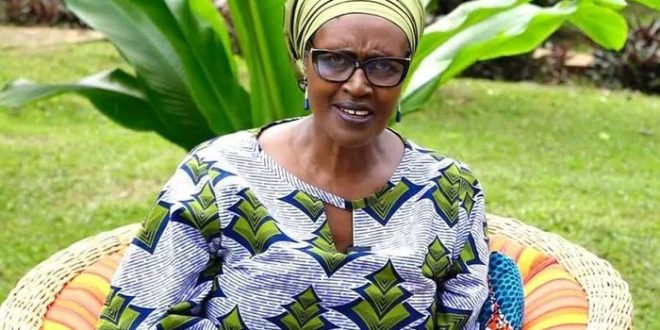
Winnie Byanyima has once again stepped forward to defend Kampala Archbishop Paul Ssemogerere following public criticism over the postponement of a special mass intended to pray for her detained husband, Dr. Kizza Besigye, and other political prisoners. The unexpected delay of the service at Rubaga Cathedral sparked intense debate, with some voices on social media claiming the Church had bowed to State influence.
Speaking outside the Kampala High Court on Tuesday after attending her husband’s court session, Byanyima firmly rejected suggestions that the Archbishop had surrendered to pressure. She described him as courageous and principled, insisting that the Catholic Church remains strong and independent despite the controversy.
According to Byanyima, President Yoweri Museveni personally reached out to the Archbishop before the scheduled mass. She alleged that the President expressed concern that intelligence reports indicated the gathering could be used as a platform for political mobilisation rather than purely spiritual reflection.
The mass had been organised by supporters who wanted to pray for Dr. Besigye and others they consider political detainees. Its sudden postponement on Monday afternoon left many worshippers confused and disappointed, leading to widespread speculation about what may have taken place behind closed doors.
Byanyima claimed that during the phone conversation, the Archbishop firmly advised the President against interfering in church affairs. She said he warned that stepping into the spiritual domain could have serious consequences and blur the line between religious leadership and political authority.
In her remarks, Byanyima accused the President of overreaching by attempting to influence a religious event. She stated that no leader has the right to decide who can pray, where they can pray, or what they can pray for. Faith, she emphasized, is a personal and sacred matter that must remain free from political control.
She further revealed that after their discussion, the President reportedly suggested postponing the mass for a few days while he reviewed the intelligence concerns. The Archbishop, she said, agreed to wait for further communication but did not abandon the Church’s principles.
The unfolding situation has triggered broader conversations about religious freedom and the balance of power between church and state in Uganda. As public debate continues, many observers see the incident as more than a simple scheduling change. Instead, they view it as a powerful reminder of the delicate line between political authority and spiritual independence.