
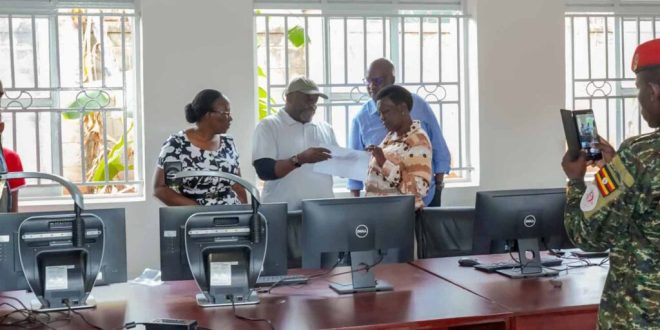
The Uganda Communications Commission (UCC) Board has just wrapped up a week-long tour across Eastern Uganda, a journey aimed at exploring the real-world impact of digital inclusion projects funded by the Uganda Communications Universal Service and Access Fund (UCUSAF). The tour provided the Board with an opportunity to evaluate firsthand how these digital initiatives are being implemented and to assess their effectiveness in helping reduce the digital divide in the country.
The visit was more than a routine inspection. It was an essential part of the UCC’s mandate to ensure that public service projects designed to expand digital access are not only functional but also sustainable in the long term. By engaging directly with the communities and institutions benefiting from these projects, the Board aimed to understand the challenges and successes these initiatives face. Their findings will guide future interventions and help shape the strategies needed to bring the benefits of the digital world to every corner of Uganda.
One of the key takeaways from the trip was the recognition that the success of these digital projects hinges largely on local ownership. For these facilities and services to be sustainable, institutions and communities must take responsibility for maintaining and utilizing the resources provided. The Board stressed the importance of ensuring that these digital solutions aren’t seen as short-term fixes but as long-term investments that require ongoing commitment and management from all stakeholders.
The Board’s visits included several critical sites, such as the Jinja Remote Spectrum Monitoring Site and the UCC Mbale Regional Office, where they observed the infrastructure supporting Uganda’s communications networks. These sites are crucial for monitoring the frequency spectrum that powers the country’s digital communication systems, ensuring that services remain reliable and efficient across Uganda’s vast and diverse geography.
Spotlight on Africa, one of the featured facilities, provided the Board with further insights into the intersection of technology and social development. The project focuses on empowering local communities by providing access to information, technology, and resources that enable them to thrive in an increasingly digital world. The Board’s engagement with this project highlighted how digital inclusion isn’t just about technology—it’s also about empowering individuals and communities to use that technology to improve their lives.
Throughout the tour, the Board emphasized that successful digital inclusion efforts must be holistic, focusing not only on infrastructure but also on educating and equipping local populations to make the most of the digital tools available to them. This focus on comprehensive support will be essential in bridging the digital divide in rural and underserved areas, where access to technology remains a significant challenge.
The feedback and insights gathered during this field engagement will play a crucial role in shaping the future of digital policy and regulation in Uganda. The UCC plans to use these findings to refine its approach to digital inclusion, ensuring that future projects are designed with a deeper understanding of local needs and circumstances. The Board’s visit reinforced the importance of continual learning and adaptation in achieving Uganda’s broader goal of digital transformation.
In the long run, this tour marks a significant step in Uganda’s journey towards an inclusive digital economy. The UCC is committed to ensuring that every Ugandan, regardless of location or background, has access to the opportunities digital technology can offer. With a clear vision for the future, the Commission is not just fostering infrastructure but creating the foundations for a more digitally equitable society.


