
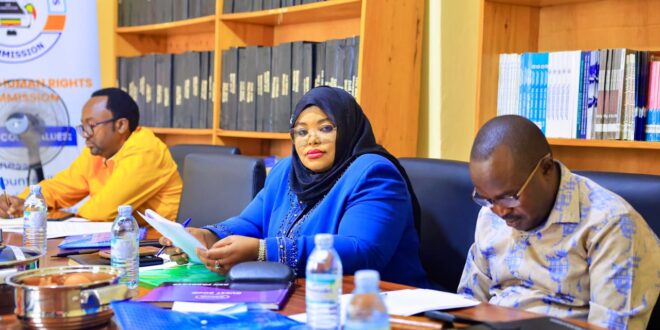
The Uganda Human Rights Commission (UHRC) has raised serious concerns about the state of human rights in the Masaka region after an inspection of Masaka Central Government Prison exposed congestion, alleged torture of suspects and challenges in protecting children in conflict with the law.
The inspection, conducted through the UHRC Masaka Regional Office, is part of the Commission’s efforts to monitor the treatment of people held in detention and identify challenges affecting the protection and promotion of human rights. The team is led by Commissioner Hon. Shifrah Lukwago on behalf of Chairperson Hon. Mariam Wangadya.
During a meeting with prison authorities, Regional Prisons Commander ASP Phelix Mugasa attributed part of the congestion at Masaka Prison to inmates from Lwengo District. He explained that although Lwengo has a prison facility, the absence of a High Court means suspects facing serious charges, including capital offences, are transferred to Masaka while awaiting committal.
The Commission also heard disturbing allegations from inmates who claimed they had been tortured while in police custody. Among the allegations was that some suspects had their nails pulled out during interrogation. The claims are expected to attract further attention as UHRC examines the treatment of suspects within the criminal justice system.
Beyond the prison, UHRC officials raised concerns about alleged discrimination against people living with HIV/AIDS in the workplace. Regional Head Ms. Justin Nambi Kasujja cited Oil Palm Uganda Limited, alleging that applicants are subjected to HIV testing and that those who test positive are subsequently denied employment.
The Commission was also told that Masaka and surrounding areas lack a dedicated remand home for juveniles. As a result, children in conflict with the law are reportedly transported to facilities in Naguru, Kampala, or Kampiringisa in Mpigi District, creating additional challenges for police responsible for their transportation and custody.
Nambi further alleged that some police officers resort to recording juveniles as older than their actual age so they can be detained in adult cells when juvenile facilities are unavailable. Such practices, if established, could raise significant concerns about the protection of children within the justice system.
The UHRC inspection has consequently placed a number of pressing human rights issues in Masaka under scrutiny, from overcrowded prisons and alleged torture to workplace discrimination and inadequate juvenile facilities. The Commission is engaging relevant institutions as it continues its assessment of human rights conditions in the region.


