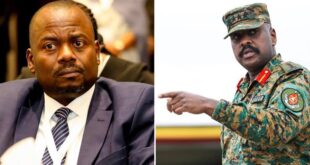
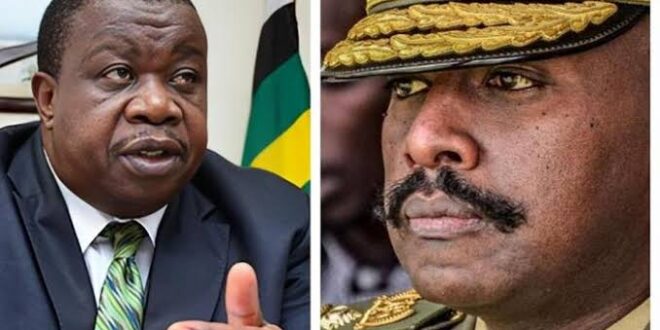
Veteran Ugandan politician and Minister for Internal Affairs Gen Kahinda Otafiire reportedly left Chief of Defence Forces Gen Muhoozi Kainerugaba and his uncle, Gen Salim Saleh, waiting for about one hour and 30 minutes before finally addressing them at a meeting intended to settle their differences.
The unusual incident, as narrated by political commentator Andrew Mwenda, has drawn attention because of the seniority of the individuals involved and the tensions that had brought them together. Otafiire reportedly used the opening moments of the meeting to remind those present about his long political history and the significant age difference between himself and Muhoozi.According to Mwenda, who said he accompanied Muhoozi to the meeting in Kapeeka, the gathering was organised following President Yoweri Museveni’s intervention in the disagreement between Otafiire and the army chief.
Museveni was reportedly concerned about the public exchange of criticism between the two senior government figures and wanted them to resolve their differences through dialogue rather than continue their confrontation in public. Gen Salim Saleh, whose real name is Caleb Akandwanaho, was reportedly tasked with chairing the meeting to help the two men find common ground.However, the meeting did not start as quickly as the delegation may have expected. Mwenda recalled that Otafiire kept them waiting for approximately 90 minutes before he finally began speaking. The delay reportedly became a notable part of the gathering, considering that Muhoozi is the serving CDF and Saleh is a senior military figure with a long history in Uganda’s political and military establishment. Although the reason for the delay was not established in Mwenda’s account, the incident added an unusual twist to a meeting that had been arranged to ease tensions among influential figures.When Otafiire eventually addressed the gathering, he reportedly began by recounting his personal and political history instead of immediately discussing the disagreement with Muhoozi. He reminded Saleh about his journey to Dar es Salaam, Tanzania, in 1974, when he was approximately 14 years old.
By bringing up events from more than five decades earlier, the veteran minister appeared to be emphasising his long experience and the years he had spent navigating Uganda’s political struggles. His remarks reportedly set the tone for a discussion in which age, seniority and political history became important talking points.Mwenda said Otafiire went further by pointing out that Muhoozi was only a few months old when he made that early journey to Tanzania. The comparison highlighted the substantial age gap between the two men, with Otafiire presenting himself as someone whose political experiences stretched back to a period when the current army chief was still an infant. He also reportedly recalled his experiences in Moshi and his involvement in political mobilisation alongside Museveni.
The recollections offered a reminder of the veteran minister’s longstanding association with the political history that shaped Uganda’s current leadership.As the meeting progressed, attention eventually shifted to the disagreement that had prompted Museveni’s intervention. Mwenda reportedly questioned whether Otafiire, as an elder with extensive political experience, could have approached Muhoozi privately to offer advice instead of allowing their differences to develop into a public confrontation. The question raised a broader issue about how senior leaders should handle disagreements, particularly when their public statements risk escalating tensions within the country’s political and security establishment.According to Mwenda, Otafiire responded that he did not have Muhoozi’s telephone number. The disagreement had reportedly intensified after Otafiire made remarks concerning a general whom he suggested favoured violence. Muhoozi subsequently demanded an apology and threatened to arrest the veteran minister, prompting Otafiire to respond defiantly that he would rather die than live begging.

The exchange attracted attention because it involved two prominent figures serving within the same government, raising questions about respect, communication and the handling of disagreements among senior leaders.Mwenda’s account provides an unusual glimpse into the opening of the Kapeeka meeting, particularly Otafiire’s reported decision to keep the delegation waiting before reminding those present of his age and political journey. However, the account does not establish whether the meeting ultimately resolved the disagreement between the minister and Muhoozi. What remains clear from the reported exchange is that the gathering brought together influential figures with different experiences and perspectives, making reconciliation a delicate task. Whether the discussions succeeded in restoring a working relationship between the two men remains unclear from the account.