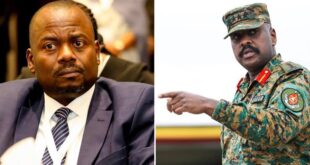
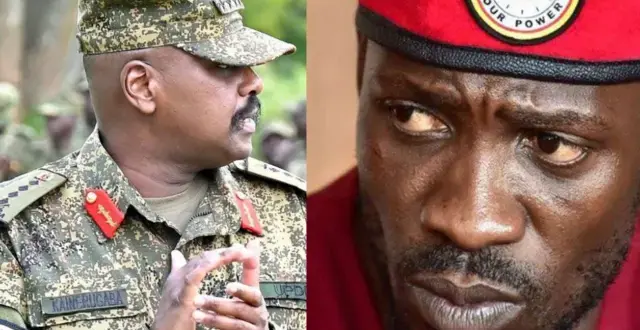
The Uganda People’s Defence Forces (UPDF) has accused Western media organisations of favouring opposition leader Robert Kyagulanyi, popularly known as Bobi Wine, over General Muhoozi Kainerugaba in discussions about who should succeed President Yoweri Museveni. The army argues that some international publications have consistently portrayed Muhoozi negatively while giving attention to individuals and groups opposed to the Ugandan government.
The accusations were made by UPDF Acting Director of Defence Public Information, Colonel Chris Magezi, in a statement dated October 10, 2026. Magezi was responding to a New York Times article titled The Authoritarian Future Is Already Here, written by Megan K. Stack and published on October 8, 2026. The publication examined Uganda’s political situation, alleged human rights abuses and the country’s possible leadership transition after Museveni.Magezi questioned the information presented in the article, accusing the writer of relying on accounts from opposition politicians, activists and other government critics.
He also mentioned previous publications by The Telegraph, The Wall Street Journal and The Economist, arguing that they had similarly presented General Muhoozi and the Ugandan military in an unfavourable manner.In one of the strongest remarks in his response, Magezi suggested that Western media outlets would rather see Bobi Wine or someone with similar political beliefs become Uganda’s next president than Gen Muhoozi. He argued that the negative coverage surrounding the army chief was partly influenced by the fact that he was not the preferred candidate of certain Western publications. However, he insisted that Uganda’s leadership should be determined by its citizens rather than foreign interests.The UPDF spokesperson also addressed allegations raised by exiled Ugandan writer Kakwenza Rukirabashaija, whose experiences in detention were highlighted in the New York Times article. Kakwenza reportedly described being subjected to humiliating treatment and beatings that left him with injuries and scars.
He further alleged that he was offered money to keep quiet about the alleged mistreatment.Magezi rejected the allegations linking Gen Muhoozi to Kakwenza’s experiences, insisting that the two had never met. He questioned the account presented in the publication and challenged the credibility of the claims. However, the army’s response did not independently establish the circumstances surrounding the alleged detention and injuries.Beyond the allegations, Magezi defended Muhoozi’s military record, arguing that international publications had concentrated heavily on his controversial social media statements instead of recognising his military service. He maintained that serious accusations against military officers should be supported by credible evidence and properly investigated rather than being presented as established facts based on disputed accounts.
The UPDF reaffirmed its commitment to operating within Uganda’s laws and supporting civilian authorities when required. Magezi also warned against what he described as foreign interference in Uganda’s internal affairs, while maintaining that military personnel who violate the law should be held accountable. His remarks have added another dimension to the growing international debate about Uganda’s political future, particularly the possible succession question involving Gen Muhoozi, Bobi Wine and other political figures.