
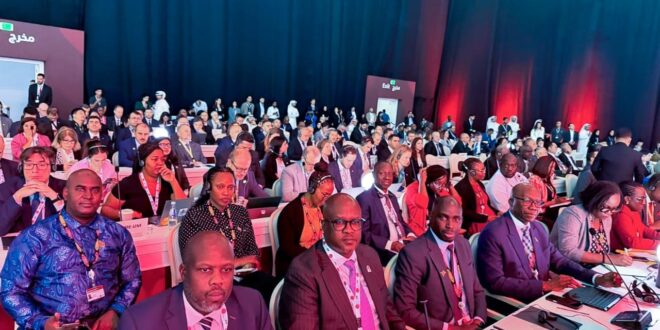
Uganda has stepped up its international campaign to maintain its influence in global telecommunications governance as the country joins other African nations at the 2026 International Telecommunication Union (ITU) Plenipotentiary Conference in Doha, Qatar. The East African nation is seeking re-election to the ITU Council under Region D, representing Africa, in a contest expected to attract intense diplomatic competition.
The high-level conference, which officially opened on November 9, 2026, brings together government representatives, telecommunications regulators and technology industry leaders from across the world to discuss the future of global digital communication. The meeting, which runs until November 27, provides an important platform for member states to determine the direction of international telecommunications policies and elect leaders who will oversee the organisation during the next four years.
Uganda’s re-election bid comes at a time when 19 African countries are competing for only 13 positions allocated to the continent on the ITU Council. This means that six countries will miss out, making the contest particularly competitive as nations seek to strengthen their representation in an organisation that plays a major role in shaping global digital policies.Through its continued participation, Uganda hopes to retain its position at the decision-making table and contribute to discussions surrounding affordable internet access, digital infrastructure development, technological innovation and the expansion of communication services. Maintaining its Council membership would also give the country an opportunity to continue representing African interests in international telecommunications discussions.
The ITU Council is an important governing organ responsible for overseeing the organisation’s activities, strategies and policies between the four-yearly Plenipotentiary Conferences. Its decisions influence how countries cooperate on telecommunications development, radio-frequency management, international technology standards and efforts to connect communities that remain underserved by modern communication infrastructure.Uganda’s delegation is led by the Minister of ICT and National Guidance, Rt. Hon. Justine Kasule Lumumba. Other members include Uganda Communications Commission Executive Director Nyombi Thembo, officials from the Ministry of Foreign Affairs and UCC staff. The delegation is expected to use the conference to strengthen Uganda’s diplomatic engagements and present the country’s interests in the global digital transformation agenda.The conference is taking place under the theme, “Together for a Connected Digital Future,” with discussions focusing on expanding global connectivity, strengthening digital infrastructure, improving emergency communication systems and embracing emerging technologies such as artificial intelligence.
These priorities are particularly important for developing countries like Uganda, where expanding affordable and reliable internet access remains essential for economic growth, education, public service delivery and business development.Uganda’s quest for another term on the ITU Council therefore represents more than a regional election campaign. It is an opportunity for the country to maintain its international influence, contribute to decisions affecting Africa’s digital development and strengthen its position in the rapidly changing global technology sector. The outcome of the election will determine whether Uganda retains its seat for the 2027–2030 Council term.