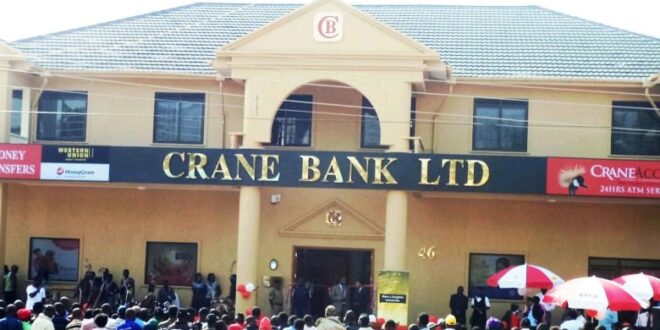
A fresh financial and legal dispute has emerged between Bank of Uganda (BoU) and businessman Sudhir Ruparelia over Shs219.4 billion in outstanding money linked to the controversial closure of Crane Bank Limited, with both sides presenting sharply different explanations about who should take responsibility.The disagreement came to the spotlight during a parliamentary hearing before the Committee on Commissions, Statutory Authorities and State Enterprises (COSASE), chaired by Kyadondo East MP Muwada Nkunyingi, where Bank of Uganda Governor Michael Atingi-Ego was questioned about the billions of shillings recorded as outstanding in the central bank’s financial statements.
Appearing before the committee, Atingi-Ego maintained that the Shs219.459 billion was recoverable from Crane Bank and its former shareholders, insisting that the money represented financial support extended to the struggling lender before and during the period surrounding its takeover in October 2016.The governor explained that Crane Bank had experienced serious liquidity challenges and repeatedly requested financial assistance from Bank of Uganda through its lender-of-last-resort facility. According to him, the requests for support totalled approximately Shs466 billion, with the bank offering its branch network as security.Atingi-Ego further told MPs that after Crane Bank was placed under statutory management on October 20, 2016, several financial obligations, including letters of credit and other commitments made before the takeover, became due. Since the bank’s accounts lacked sufficient funds to meet these obligations, Bank of Uganda provided additional liquidity support to cover them.He insisted that the financial assistance was properly documented and had previously been examined by the Auditor General and Parliament during investigations into the closure of commercial banks in 2018 and 2019. He explained that the Shs219.4 billion remained outstanding because part of the money had not yet been recovered.However, Sudhir Ruparelia, Crane Bank’s former principal shareholder, has strongly rejected the suggestion that he and other shareholders should personally be held responsible for the disputed expenditure. In a letter to Parliament, the businessman argued that Bank of Uganda had already taken full control of Crane Bank before incurring the expenses now being questioned.Ruparelia maintained that following the takeover, the bank’s board was suspended and a statutory manager appointed, meaning the former directors and shareholders had no involvement in decisions made by the central bank. He also questioned why shareholders should be expected to account for transactions they were neither consulted about nor informed of.The businessman further argued that any outstanding receivables arising from Bank of Uganda’s intervention should belong to Crane Bank as a corporate entity rather than its shareholders personally, citing the legal principle of limited liability. He added that the former shareholders had never received a detailed accounting report from the statutory manager explaining how the institution was managed after the takeover.Ruparelia also reminded Parliament of previous legal battles in which he said Bank of Uganda had suffered court defeats, including proceedings that went through the High Court, Court of Appeal and Supreme Court. However, the current Shs219.4 billion dispute involves separate issues that have not yet received a final determination.The parliamentary hearing took another turn when Atingi-Ego warned that continued examination of the disputed expenditure could affect ongoing court proceedings in London involving Crane Bank’s former shareholders and dfcu Bank.
The case concerns the circumstances surrounding the takeover and transfer of selected Crane Bank assets and liabilities, with the claimants seeking substantial damages while the defendants deny wrongdoing.The governor argued that some of the issues being investigated by COSASE overlap with matters before the English courts and could potentially be used against Bank of Uganda in the foreign proceedings. He consequently suggested that substantive discussions could be postponed until the London case is determined or handled in closed parliamentary sessions.Committee chairperson Muwada Nkunyingi, however, indicated that Parliament would continue examining the matter, including reviewing the documents supporting Bank of Uganda’s financial claims and considering explanations from the former Crane Bank shareholders and the Ministry of Finance.
No final decision was reached on who should pay the Shs219.4 billion, leaving the country with another major question surrounding the controversial collapse of one of Uganda’s prominent indigenous commercial banks.Nearly ten years after Crane Bank was taken over and selected assets and liabilities transferred to dfcu in January 2017, the financial consequences of the intervention continue to generate legal battles, parliamentary scrutiny and disagreements between the central bank and the former owners.The latest developments now place the spotlight on the central question of accountability: Should Sudhir Ruparelia and other former shareholders be held responsible for the outstanding money, or should Bank of Uganda pursue the claim against Crane Bank itself based on the transactions undertaken after the statutory takeover?