
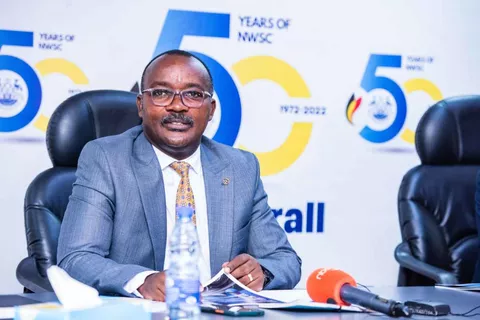
Uganda’s National Water and Sewerage Corporation (NWSC) has unveiled an ambitious roadmap aimed at dramatically expanding access to clean and safe water across the country. With a multi-trillion investment strategy stretching from 2025 to 2030, the utility provider is positioning itself to serve millions more Ugandans and reshape the nation’s water infrastructure.At the center of this vision is a massive 8.2 trillion shilling plan designed to accelerate water access nationwide.
According to NWSC leadership, a significant portion of this funding—6.8 trillion shillings—has already been secured, leaving a gap that the corporation hopes to bridge through government support and international development partnerships.The strategy outlines a steady expansion in water connections, targeting an increase from just over one million to nearly 1.3 million connections within five years. If achieved, this growth would extend services to an additional six million people, pushing the total number of beneficiaries to approximately 26 million by the end of the decade.
To meet these goals, NWSC plans to aggressively scale up its operations. Each year, the corporation intends to roll out at least 60,000 new water connections while extending pipeline networks by roughly 500 kilometers. In addition, thousands of villages are expected to benefit from newly established safe water points, bringing essential services closer to underserved communities.This push builds on notable progress made in recent years. Since 2017, Uganda’s water distribution network has expanded თითქმის twofold, while national coverage has surged from half the population to more than four-fifths. These gains highlight both the effectiveness of past investments and the growing demand for reliable water services.However, the journey toward universal access remains uneven. In regions with established infrastructure, water remains affordable and accessible.
Yet in more remote or underserved districts, residents face steep costs, sometimes paying many times more for the same quantity of water. This disparity underscores the urgent need for equitable distribution.Local leaders have also raised concerns about the human cost of limited access. In some communities, families are forced to rely on unsafe water sources, including shared ponds used by livestock. Such conditions continue to fuel the spread of waterborne diseases, making improved access not just a development issue but a critical public health priority.
Beyond expansion, NWSC must also tackle persistent operational challenges. Water losses due to leaks and illegal connections remain high, while acts of infrastructure vandalism have disrupted supply in several regions. Addressing these inefficiencies will be crucial if the corporation is to sustain its growth and deliver on its bold promise of clean water for millions more Ugandans.


