
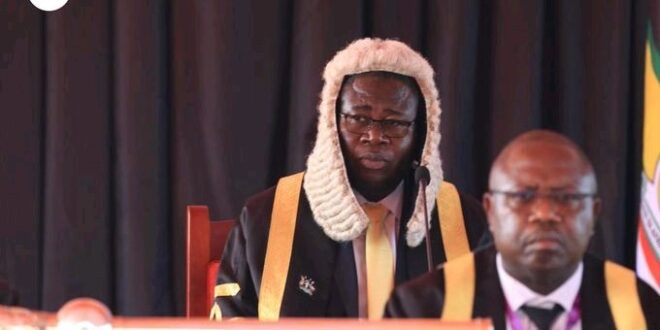
Speaker Jacob Oboth-Oboth has launched one of the most far-reaching financial reforms in Parliament’s recent history, slashing billions of shillings previously controlled by the Speaker’s Office and redirecting the funds to parliamentary committees. The move, which reduces the office’s allocation from more than Shs24 billion to just Shs3.9 billion, is intended to strengthen oversight, improve accountability, and restore public confidence in Parliament.
Addressing legislators, Oboth-Oboth revealed that the billions of shillings that had been sitting under the Speaker’s Office would now be distributed directly to committees to enable them to carry out their constitutional responsibilities effectively.
He argued that committees play a central role in holding government institutions accountable and should therefore have sufficient resources to perform their work independently.The Speaker stressed that every committee will be required to prepare a detailed and costed work plan before receiving funding. According to him, this new arrangement will ensure transparency while guaranteeing that committees are no longer financially constrained when conducting investigations, field visits, and oversight activities.
Oboth-Oboth said Parliament cannot effectively supervise government agencies if lawmakers are forced to seek facilitation from the same institutions they are supposed to monitor. He noted that such practices undermine the integrity of Parliament and create an environment where accountability can easily be compromised.In a statement that drew attention across the House, the Speaker declared that his office would no longer operate as a centre for donations and personal financial assistance. He emphasized that public funds should be used to strengthen institutions rather than support a culture of patronage that distracts Parliament from its core mandate.
The reform-minded Speaker also warned accounting officers and government officials to take their responsibilities seriously, saying Parliament will intensify scrutiny of Auditor General reports and findings from accountability committees. He urged public servants to manage public resources honestly and prepare to answer for any irregularities uncovered during oversight processes.Oboth-Oboth further questioned the prolonged delay in the construction of Parliament’s new chamber, expressing concern that a project launched more than a decade ago remains unfinished despite repeated budget allocations.
He suggested that vested interests and corruption could be among the factors behind the slow progress of the project.Describing the changes as a complete reset of Parliament’s operations, the Speaker said his leadership is committed to restoring discipline, transparency, and adherence to constitutional principles. By redirecting billions of shillings from discretionary spending to committee work, Oboth-Oboth has signaled a new era focused on institutional strength, accountability, and more effective oversight of government.


