
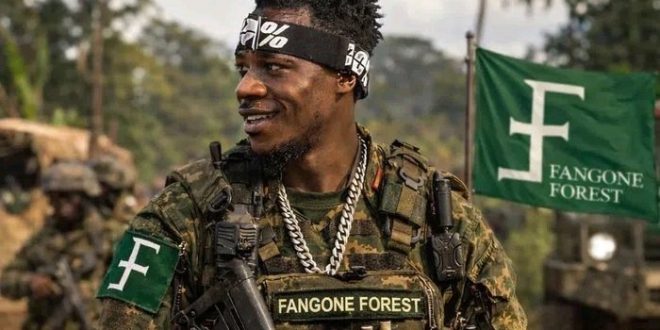
Chaos and confusion gripped onlookers on Friday afternoon when Ugandan artist Alien Skin was suddenly detained in a heavily coordinated operation near Wankulukuku playground. The singer, together with members of his Fangone Forest group, was surrounded by numerous military police officers in a scene that many described as intense and unexpected.
Witnesses say the operation unfolded with speed and precision. A truck carrying uniformed officers reportedly pulled up before security personnel quickly moved in, cutting off any chance of escape. Within minutes, the musician and his team were taken into custody as curious residents watched the situation escalate.
Videos of the arrest rapidly made their way onto social media platforms, capturing the dramatic moment officers closed in. The footage has since drawn widespread attention, with many questioning why such a forceful approach was used against an entertainer.
As of Friday evening, officials had not released a formal explanation regarding the arrest. Despite the silence, speculation has grown that the incident may be tied to accusations involving the improper use of military-related clothing and imagery.
The development came shortly after Alien Skin had appeared at Kitebi Secondary School, where he reportedly energized a large audience of students during a lively performance. His arrest just hours later added an unexpected twist to what had otherwise been a celebratory day for fans.
Public debate had already been intensifying earlier in the week following the circulation of a controversial video. In the clip, the artist is seen dressed in military-style gear while leading what appeared to be a ceremonial display involving his group’s flag.
The imagery sparked mixed reactions across the country. While some observers condemned the act as inappropriate and potentially unlawful, others defended it as creative expression within the entertainment industry.
Ugandan authorities have long taken a firm stance on civilians adopting military appearances or staging activities that resemble official operations. Security agencies argue that such actions risk misleading the public and undermining order, a position that has previously led to arrests and prolonged legal challenges for those accused of similar conduct.


