
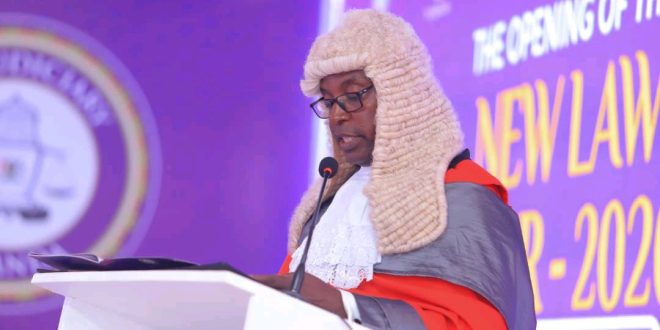
In a transformative step for the justice system, Flavian Zeija, the Chief Justice of Uganda, has introduced mobile courts aimed at extending legal services directly to communities. This initiative is designed to ensure that no citizen is left behind due to distance or lack of infrastructure.
The program is anchored in a newly issued legal framework titled The Constitution (Operation of Mobile Courts) (Practice) Directions, 2026. Published in the official gazette on March 19, the guidelines derive their authority from Article 133(1)(b) of the Constitution, formally allowing courts to function outside traditional premises.
Through this innovation, court sessions will now take place in unconventional spaces such as community halls, temporary structures, and specially equipped vehicles.
The goal is to eliminate the physical and financial challenges that have long prevented many Ugandans from accessing justice.
According to Justice Zeija, the judiciary must adapt to the realities faced by the population. He stressed that justice should be proactive and accessible, reaching citizens in remote villages, hard-to-reach islands, and even refugee settlements where formal court infrastructure is limited or nonexistent.
The mobile courts will operate across different levels of the judicial system, including both the High Court and Magistrates’ Courts. They will handle a full range of cases—civil and criminal—while strictly adhering to established legal procedures to maintain fairness and integrity.
This initiative is part of a wider reform strategy within the judiciary to modernize operations. By embracing flexible service delivery, the system aims to improve efficiency, enhance transparency, and build stronger public trust in legal institutions.
Another major benefit expected from the rollout is the reduction of case backlog. By bringing courts closer to the people and increasing the frequency of hearings, the judiciary hopes to speed up the resolution of cases and deliver timely justice.
For communities that have historically faced obstacles in reaching court services, this development represents a significant breakthrough. The introduction of mobile courts promises to narrow the justice gap, ensuring that legal support becomes accessible, inclusive, and truly nationwide.


