
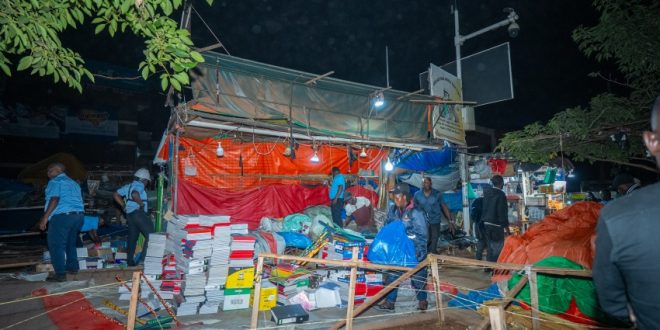
The Kampala Capital City Authority (KCCA) has started enforcing a major directive to restore order in Uganda’s capital city, Kampala. The operation began on the night of February 19, 2026, after weeks of preparing and informing traders about the changes. The goal is to remove vendors from walkways, road reserves, drainage channels, and other public spaces where trading is not allowed.
The directive was first announced on February 5 by the Minister for Kampala Capital City and Metropolitan Affairs, Minsa Kabanda. Traders were given up to February 19 to leave unauthorized trading areas. According to city leaders, the enforcement is not meant to punish traders but to organize business activities and improve the way the city works.
While speaking at the Uganda Media Centre, State Minister Kabuye Kyofatogabye explained that the aim is to create order, not to remove people from earning a living. He said walkways are meant for pedestrians, roads are for vehicles, and drainage channels are meant to allow water to flow freely. When these spaces are blocked, the whole city suffers from congestion, flooding, and poor sanitation.
Enforcement teams dressed in clearly marked blue uniforms, supported by security agencies, began clearing the streets at 8 p.m. Vendors who refuse to leave illegal spaces risk having their goods taken and may face court action. The Uganda Police Force also warned that the operation will be firm. Police spokesperson Rusoke Kituuma urged traders to move peacefully before enforcement officers remove them.
However, KCCA says it has prepared alternative places for traders. The authority has identified 2,520 empty stalls in 17 KCCA-managed markets. In addition, it has worked with 69 private markets in Kampala and created 1,980 more workspaces in nearby municipalities to accommodate those willing to relocate. Officials say priority will be given to women, youth, and persons with disabilities during the allocation process.
The directive also affects the transport sector. Taxi operators have been instructed to operate only from gazetted parks and terminals. Illegal roadside taxi stages are no longer allowed. At the same time, KCCA is working to officially approve boda boda stages across the city’s five divisions. So far, 166 out of the required 929 stages have been approved.
City authorities believe this enforcement will improve sanitation, reduce traffic congestion, and protect important infrastructure such as roads and drainage systems. They say a well-organized city benefits everyone — traders, customers, and residents alike.
For many people, this marks a new chapter for Kampala. While the changes may be challenging at first, leaders say the long-term goal is to build a cleaner, safer, and more organized capital where businesses can grow in a proper and sustainable way.


