
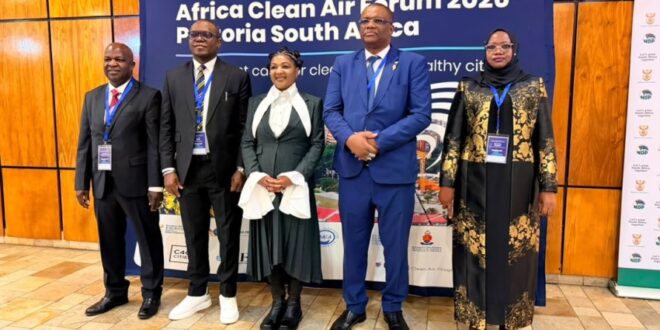
Kampala is positioning itself as a leading African city in the fight against air pollution, with the Kampala Capital City Authority (KCCA) showcasing its innovative clean air strategies at the Africa Clean Air Forum 2026 held in Pretoria, South Africa.KCCA Executive Director Sharifah Buzeki told delegates that Kampala has made remarkable progress in transforming its air quality management systems, evolving from limited monitoring capabilities in 2018 to one of the continent’s most advanced urban air monitoring networks.
The city now operates 134 air quality monitoring stations, including hyperlocal sensors that provide real-time information on pollution levels.Buzeki explained that the data collected from these monitoring systems has enabled Kampala to better understand pollution patterns and develop targeted solutions aimed at reducing average particulate matter levels by 50 percent by 2030. She emphasized that clean air is no longer just an environmental concern but a critical issue linked to public health, urban development and quality of life.She highlighted that Kampala’s clean air strategy is supported by strong policy frameworks, including environmental and public health laws, the Kampala Clean Air Action Plan 2025–2030 and the proposed Kampala Air Quality Management Bill.
According to Buzeki, these measures demonstrate the city’s commitment to creating sustainable solutions that protect residents while supporting urban growth.Beyond technology, the KCCA ED noted that Kampala’s approach places communities at the centre of environmental protection. She pointed to initiatives such as neighbourhood clean-up campaigns, training journalists as clean air advocates and engaging Village Health Teams to raise awareness and support air quality monitoring efforts.Buzeki also highlighted Kampala’s investment in green mobility as a key part of reducing emissions. The city is expanding cycling infrastructure, improving pedestrian walkways, supporting electric buses and promoting electric vehicles and motorcycles as alternatives to high-emission transport.
She added that the planned traffic control centre will help improve traffic flow, reduce congestion and contribute to cleaner air.Kampala’s efforts have earned international recognition, including winning the National Environment Sustainability Award in June 2026 and being shortlisted among 15 cities for the Guangzhou International Award for Urban Innovation from more than 265 global applicants.
The city was also recognised as the first African city inducted into the International Network of Tree Cities, with Buzeki noting Kampala’s estimated 5,705 trees per square kilometre.Calling for stronger cooperation among African cities, Buzeki said pollution remains a shared challenge that requires collective action beyond borders. She urged governments, communities and development partners to invest in reliable data systems, public participation and integrated urban solutions to build cleaner, healthier and more sustainable cities across Africa.


