
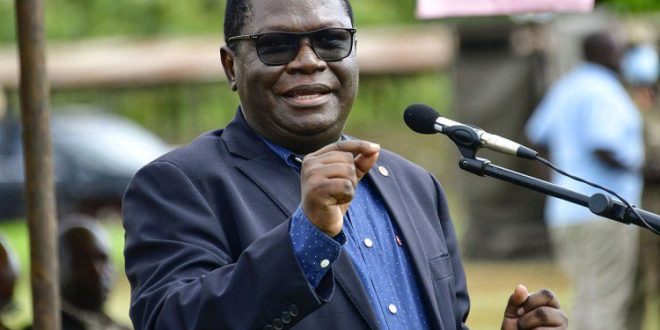
Norbert Mao, Uganda’s Justice Minister and president of the Democratic Party (DP), has firmly rejected rumors suggesting that his candidacy for Speaker of Parliament is being supported by military figures. Speaking from the DP offices in Mengo, Mao dismissed these claims as baseless, emphasizing that his bid is driven by his principles and desire to see meaningful change in Uganda’s legislative system, not by political ties with the military.
The rumors in question had linked Mao’s campaign to figures like Salim Saleh and Muhoozi Kainerugaba. However, Mao clarified that his relationship with General Saleh has always been focused on development and humanitarian work, particularly through the Salim Saleh Foundation for Humanity and the Uganda Development Forum. He stressed that their longstanding collaboration was based on mutual efforts to promote development, not political maneuvering.
Mao also addressed speculation surrounding his appearance at General Kainerugaba’s birthday celebration in Kigali, Rwanda, urging the public not to politicize personal relationships. “People connect for many reasons beyond politics. A social invitation should not be misconstrued as a political statement,” Mao explained.
Despite the swirling rumors, Mao reaffirmed his intention to remain in the race for Speaker. “This is an open contest, and I am committed to it. I am not stepping down,” he declared. Mao presented himself as a candidate who offers a fresh vision for the future of Parliament, emphasizing his dedication to transforming it into a more transparent and accountable institution.
Mao’s reform agenda for Parliament is centered around several key changes. He proposed the introduction of electronic voting to ensure transparency in parliamentary decisions, making MPs’ positions clear to the public. This, he argued, would reduce the tendency for lawmakers to avoid responsibility for their choices.
In addition to making parliamentary processes more transparent, Mao called for an increase in research support for MPs, enabling them to engage in more informed debates. He also advocated for greater public involvement in the lawmaking process, including public hearings where citizens can voice their opinions on proposed legislation. “Parliament should serve the people, and that means allowing them to participate directly in shaping the laws that affect them,” Mao said.
To enhance the accessibility of parliamentary proceedings, Mao suggested that the Hansard — the official record of debates — be translated into local languages. This, he argued, would ensure that more Ugandans could follow the debates and understand the decisions being made in Parliament.
Mao also spoke about the importance of inclusivity in Parliament, particularly regarding the opposition. “The opposition must have a voice in shaping the national agenda,” he stated. Furthermore, he proposed increasing the number of parliamentary sitting days to at least 150 per year, allowing for more comprehensive discussions on critical issues such as youth unemployment and flooding in Kampala.
In closing, Mao reiterated that his bid for Speaker is not about personal gain but about offering solutions to Uganda’s pressing challenges. He called for a Parliament that truly serves the people and listens to their concerns, making it more responsive and representative of all Ugandans.


