
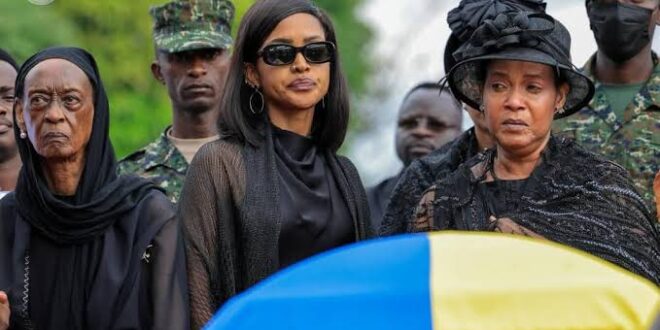
The debate over the succession of the late King Oyo Rukirabasaija has taken a new turn, with historical accounts being cited to challenge claims about when a member of the Babiito royal family can become king. As the Batooro continue to mourn the death of their monarch, questions surrounding the next leadership of Tooro are increasingly attracting public attention and emotional reactions.Barnabas Taremwa, in his reflection on the controversy, has urged the Batooro and other stakeholders to approach the succession question with honesty, fairness and respect.
He argues that the current disagreement should not be allowed to divide the kingdom, especially at a time when the royal family and the wider Batooro community are still dealing with the loss of King Oyo.One of the major arguments Taremwa challenges is the belief that a person cannot become a king when his father is still alive. He says such a statement should not be treated as an unbreakable rule of Babiito history because the history of Tooro itself provides an example that appears to show otherwise.He refers to Prince Kaboyo Olimi I, who became the first Omukama of Tooro after establishing the kingdom as a separate entity from Bunyoro. Kaboyo was the son of Omukama Nyamutukura Kyebambe III, who was still alive and ruling Bunyoro when Kaboyo established himself as the ruler of the newly independent Tooro.Historical accounts cited in the argument place Kyebambe III’s reign from approximately 1786 to 1835, while Kaboyo’s breakaway and establishment of Tooro occurred around the 1820s. This means that Kaboyo became the ruler of Tooro several years before his father died.
The accounts also indicate that Kyebambe III directed his forces not to kill his son during the conflict.For Taremwa, the story of Kaboyo is important because it shows that Babiito history is more complicated than a simple rule requiring a son to wait until his father’s death before becoming a ruler. He believes historical examples such as this should be considered carefully before conclusions are made about the present succession question in Tooro.At the same time, Taremwa says the historical argument should not be used to attack or favour any individual or group involved in the current debate.
He instead calls for the royal family, the Batooro and the Government of Uganda to avoid misinformation, hostility and political manoeuvring, arguing that the issue should be handled with dignity and a proper understanding of Tooro’s history, customs and applicable laws.He ultimately appeals for the wishes of the late King Oyo to be treated with respect as the kingdom navigates this difficult period. According to Taremwa, the succession debate should not become a battle for power, but an opportunity for the Batooro to uphold truth, justice, unity and the traditions of their kingdom while honouring the memory and legacy of their departed king.


