
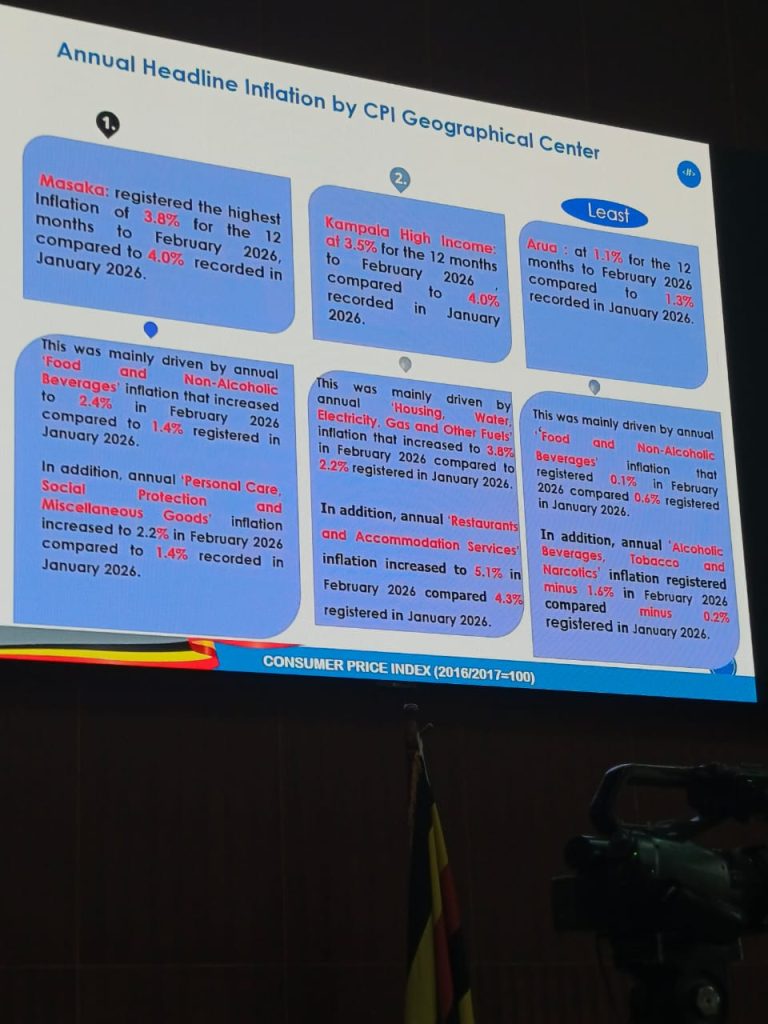
The Uganda Bureau of Statistics (UBOS) has released its Consumer Price Index and inflation report for February 2026. The report shows that annual headline inflation slowed down to 2.9 percent in the year ending February 2026.
This is lower than the 3.2 percent recorded in the year ending January 2026. The drop means that, on average, prices are still rising, but at a slower rate than before.
Core inflation, which excludes food crops and energy fuel, also reduced.
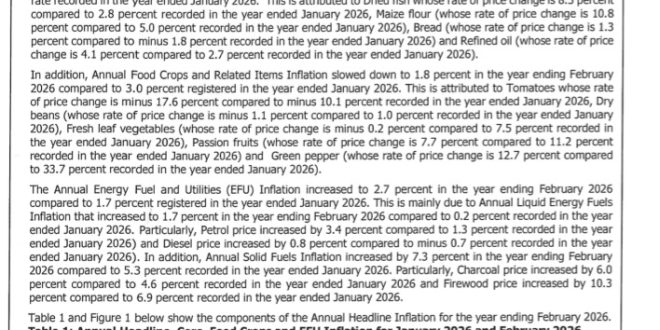
It slowed to 3.0 percent in February 2026 from 3.3 percent in January 2026. Services inflation dropped to 4.1 percent from 4.8 percent. This decline was mainly due to lower increases in passenger transport by air. Annual goods inflation also went down to 2.8 percent from 3.8 percent.
The change in goods inflation was largely influenced by items such as dried fish, maize flour, bread, and refined oil, which recorded lower price increases compared to the previous month.
Food crops and related items inflation also decreased. It fell to 1.8 percent in February 2026 from 3.0 percent in January 2026. This was mainly due to falling or slower increases in the prices of tomatoes, dry beans, fresh sweet potatoes, passion fruits, and green pepper. The lower food inflation helped to reduce the overall headline inflation for the month.
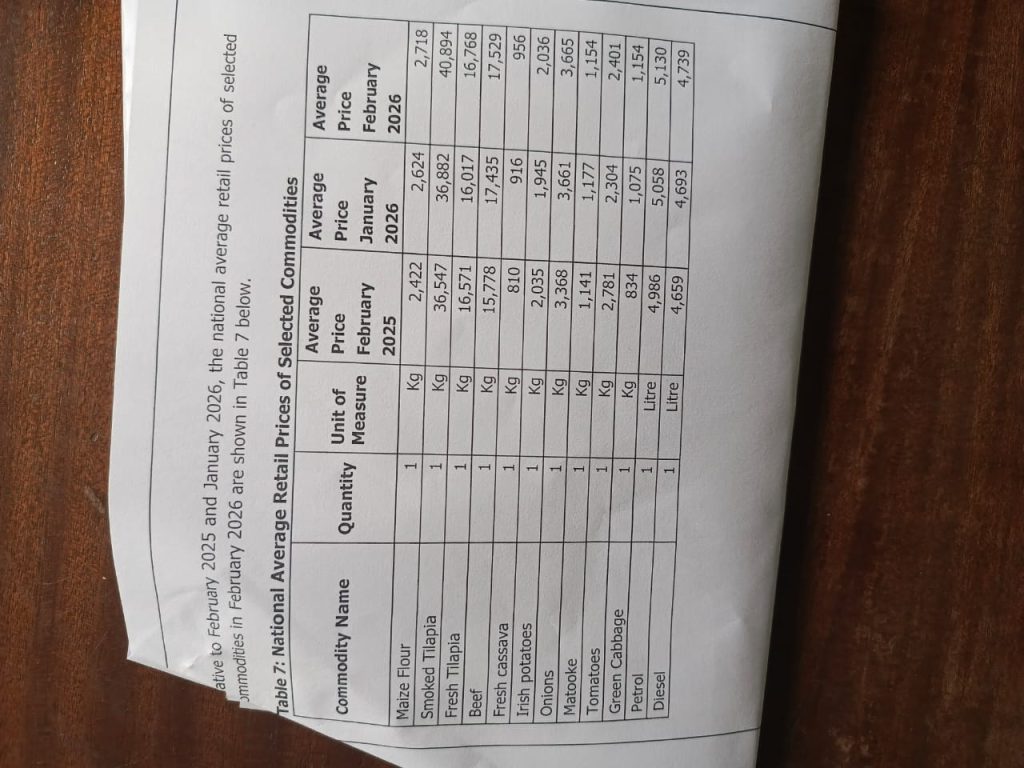
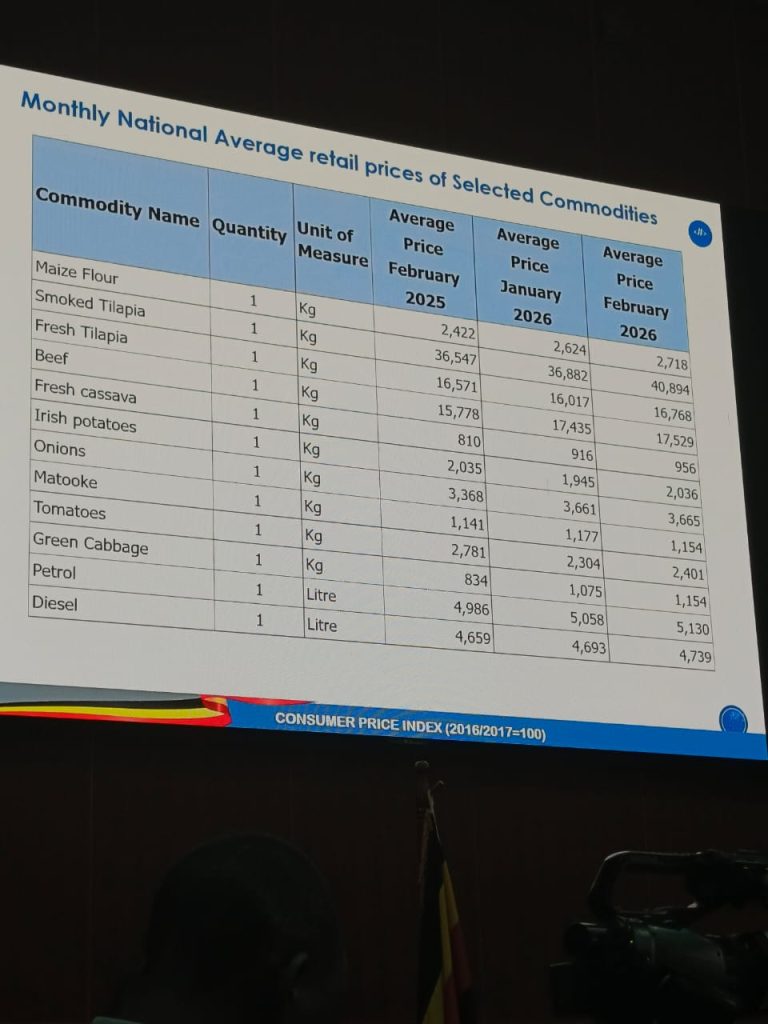
However, Energy, Fuel and Utilities (EFU) inflation increased. It rose to 2.7 percent in February 2026 from 1.7 percent in January 2026. This increase was driven by higher prices of petrol and diesel.
Solid fuels such as charcoal and firewood also recorded higher price increases compared to the previous month. Despite this rise, the overall inflation rate remained lower because food and core inflation slowed down.
In summary, the UBOS report shows that inflation in Uganda eased in February 2026. Most of the slowdown came from lower price increases in food crops, goods, and some services.

Although energy and fuel prices went up, they did not outweigh the reductions seen in other sectors.


