
Uganda has scored a major victory in its push to modernize national infrastructure after the Islamic Development Bank (IsDB) approved a record €650.75 million (approximately Shs2.8 trillion) for the construction of the Standard Gauge Railway (SGR). The funding is the largest amount ever committed by the bank to a single project in Uganda, underscoring the growing confidence of international financiers in the country’s development agenda.
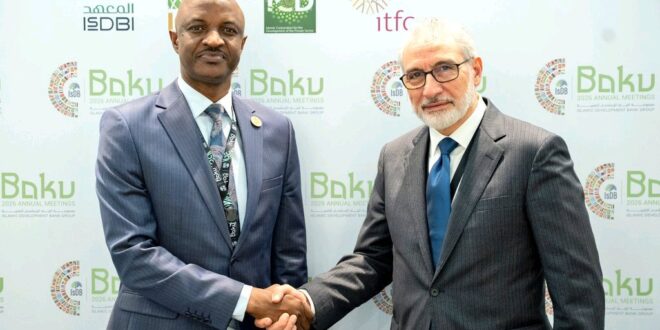
The approval was secured during the 51st IsDB Group Board of Governors’ Annual Meetings in Baku, Azerbaijan, where Uganda presented its vision for a modern railway network capable of transforming trade and transportation. The development is being viewed as a major breakthrough for a project that has been years in the making and is expected to reshape the country’s economic future.
Heading Uganda’s delegation was Permanent Secretary and Secretary to the Treasury, Dr. Ramathan Ggoobi, who welcomed the decision and described it as a critical milestone. He reiterated government’s commitment to completing all necessary financing arrangements for the railway by November 2026, paving the way for the next phase of implementation.
The massive financing package will fund several key components of the railway project, including the construction of the 553-metre Jinja Nile Bridge and the 2.12-kilometre Mbuya-Kampala Tunnel. These structures are expected to become some of the most important engineering features along the railway corridor, helping improve efficiency and connectivity.
Plans also include the development of six modern railway stations in Tororo, Iganga, Jinja, Lugazi, Kampala East and Kampala City.
To ensure smooth operations, the project will further establish three railway workshops in Tororo, Jinja and Kampala East, creating new opportunities for technical skills development and employment.
Government officials believe the railway will dramatically lower the cost of moving goods across the country while reducing dependence on road transport. The shift is expected to ease traffic congestion, reduce wear and tear on highways and make Uganda a more attractive destination for trade and investment within the region.
The latest funding strengthens the already growing partnership between Uganda and the Islamic Development Bank. The bank has financed several major projects across the country, ranging from roads and bridges to irrigation schemes and healthcare facilities, helping support Uganda’s broader development ambitions.
Speaking at the meetings, Dr. Ggoobi also praised the newly launched IsDB Concessional Fund, saying it comes at a time when many developing nations are facing shrinking and unpredictable aid flows. He called on international development institutions to become more responsive to the changing needs of member countries. With the historic railway financing now approved, Uganda has taken one of its biggest steps yet toward building a modern transport system capable of driving economic growth and regional integration for decades to come.


