
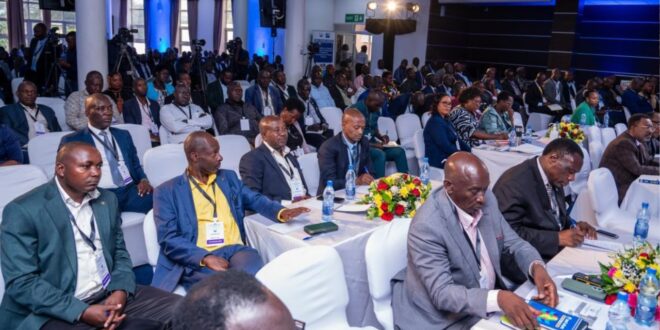
The National Water and Sewerage Corporation (NWSC) has unveiled an ambitious five-year strategy aimed at transforming water and sanitation services across Uganda, with a major focus on increasing access to clean and safe water for millions of citizens. The newly launched 2025–2030 Strategic Plan carries the theme “Water for All for Health and Prosperity” and is designed to support Uganda’s Vision 2040 as well as the Fourth National Development Plan.The corporation says the new roadmap builds on impressive achievements recorded between 2020 and 2025, a period during which NWSC expanded operations from 258 towns to 287 towns nationwide.
During the same timeframe, the customer base rose significantly from 724,000 to more than one million active customers, while the number of people accessing water services increased from 15 million to 20 million.Financially, the utility body also registered substantial growth over the past five years. Annual revenue climbed from UGX 385 billion to UGX 649 billion, while customer satisfaction remained steady at nearly 80 percent despite increasing demand and pressure on infrastructure. Officials believe these gains provide a strong foundation for the corporation’s next phase of expansion.
Under the new strategy, NWSC now aims to extend water services to at least 26 million Ugandans by the year 2030. The corporation also plans to construct and extend more than 500 kilometres of pipeline networks while rolling out approximately 60,000 new water connections every year in urban and semi-urban areas across the country.A major target within the plan is the reduction of non-revenue water, which currently stands at about 34 percent. NWSC intends to lower these losses to 28 percent by strengthening infrastructure, improving monitoring systems and addressing illegal water connections, leakages and faulty metering systems that continue to affect operational efficiency and revenue collection.
To successfully implement the strategy, the corporation estimates that it will require nearly UGX 8.2 trillion in investments over the next five years. According to management, about 60 percent of the funding is expected to come from internally generated resources, while development partners will contribute 27 percent. Government support, market-based financing and other sources are also expected to play a key role in financing the ambitious projects.NWSC has also acknowledged growing challenges arising from rapid urbanisation, climate change, ageing infrastructure and increasing population pressure.
Officials say some parts of the distribution system continue to experience technical water losses ranging between 10 and 15 percent due to weak infrastructure, pressure fluctuations and inefficient network layouts that affect service reliability and billing accuracy.To overcome these hurdles, the corporation is intensifying efforts to modernise operations through digital management systems, infrastructure rehabilitation and stronger enforcement against vandalism and illegal water use.
Management insists that partnerships with government agencies, development partners and local communities will be critical in ensuring that the corporation achieves its mission of closing service gaps while improving efficiency, sustainability and access to clean water across Uganda.


