
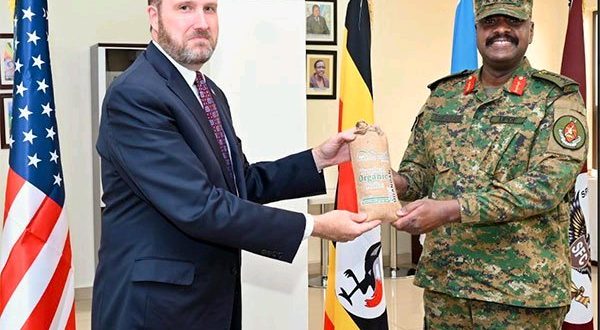
Diplomatic relations between the United States and Uganda have been shaken following a public clash between US Senator Jim Risch and Uganda’s Chief of Defence Forces, Gen. Muhoozi Kainerugaba.
The confrontation comes after President Yoweri Museveni secured a seventh term amid a contentious election, spotlighting the fragile balance between domestic power dynamics and international relations.
Senator Risch, who chairs the Senate Foreign Relations Committee, warned that Muhoozi had “crossed a red line,” threatening to reevaluate Uganda’s security partnership with the US, including possible sanctions. The warning followed Muhoozi’s accusations that the US Embassy had aided opposition leader Robert Kyagulanyi, also known as Bobi Wine, in fleeing the country—a claim Muhoozi later deleted, claiming he had been misinformed.
The exchange triggered a temporary social media silence from Muhoozi, signaling the weight of the rebuke. When he returned, he asserted that while the US could reassess cooperation, Uganda’s dignity could not be undermined.
The incident underscores the growing tension between Muhoozi, seen as the heir apparent to Museveni, and powerful US policymakers who control military aid and sanctions.
US sanctions carry far-reaching consequences. They can include travel restrictions, frozen assets, and reputational isolation on the international stage. Uganda has previously seen officials targeted, including former police chief Gen. Kale Kayihura, Maj. Gen. Abel Kandiho, and Parliament Speaker Anita Among. Any action against Muhoozi would mark an unprecedented escalation with wide-ranging political implications.
Muhoozi’s confrontations are not limited to the United States. He has previously challenged European diplomats, suspended cooperation with Germany, and issued ultimatums to foreign envoys. His public threats against opposition leaders, including attacks on Kyagulanyi’s family and associates, have drawn global scrutiny and raised questions about Uganda’s governance and rule of law.
The strain extends to military collaboration. Uganda is a key partner in counterterrorism operations, particularly against Al-Shabaab in Somalia. Yet recent visits by US AFRICOM commanders to neighboring countries have bypassed Uganda, sending a subtle diplomatic signal. Observers suggest that Muhoozi’s high-profile and combative approach has complicated Washington’s engagement in the region.
Economic and humanitarian ties also face pressure. A new five-year, $2.3 billion health partnership aims to strengthen HIV/AIDS, malaria, tuberculosis, and maternal health programs, but concerns about data control and sovereignty remain. Simultaneously, new visa bond requirements for Ugandans traveling to the US highlight the human impact of the diplomatic standoff.
As tensions rise, Uganda faces a complex challenge. Muhoozi’s assertive style clashes with US expectations for stability and accountability, raising uncertainty over military, diplomatic, and economic ties. The outcome of this dispute could reshape Uganda’s international relationships and influence the country’s trajectory on the global stage for years to come.


