
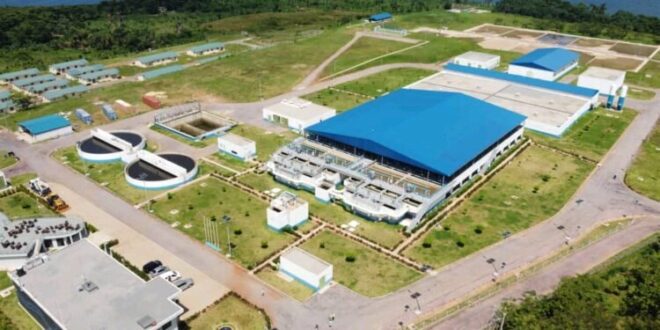
Residents across Kampala, Wakiso, Mukono and other parts of the Greater Kampala Metropolitan Area are set to benefit from a major water infrastructure expansion as the National Water and Sewerage Corporation (NWSC) works to strengthen the region’s supply network and meet rising demand.
The expansion is being implemented under the Rehabilitation, Restructuring, Rezoning and Extension of the Greater Kampala Metropolitan Area Water Supply Network Project, Package 2B, commonly known as the Katosi Distribution Network Expansion.At the centre of the project is the effort to connect more communities to the high production capacity of the Katosi Water Treatment Plant, which is designed to produce more than 240 million litres of water every day. The additional capacity is expected to help close existing supply gaps and improve access to reliable water across the metropolitan area.
According to NWSC, the project involves the construction of approximately 71 kilometres of transmission mains, alongside three new water reservoirs and two booster stations. The corporation is also upgrading the Supervisory Control and Data Acquisition (SCADA) system to improve monitoring and management of the expanding water network.One of the major components is a 7.7-kilometre DN 1000 transmission pipeline, whose completion is expected in January 2027. Once operational, the pipeline will strengthen water supply to areas including Namugongo, Kira, Buwaate, Bulindo, Mulawa, Kasangati and neighbouring communities.The project further provides for the construction of the Kungu and Kabulengwa booster stations, together with reservoirs at Kanyanya, Mutungo and Kabulengwa. The facilities are expected to improve water movement through the network while increasing storage capacity and helping maintain more stable supplies.
The expansion comes at a time when Greater Kampala is experiencing rapid population growth and urban development, putting increasing pressure on existing water infrastructure. NWSC says the new facilities are being developed with the long-term needs of the metropolitan area in mind, with the upgraded network expected to support water demand up to 2040.With construction continuing on the transmission pipelines, reservoirs and booster stations, NWSC expects the project to gradually bring Katosi’s expanded production capacity closer to consumers. The completion of the 7.7-kilometre pipeline in January 2027 is expected to mark one of the first major milestones in efforts to improve water reliability across the Greater Kampala region.


