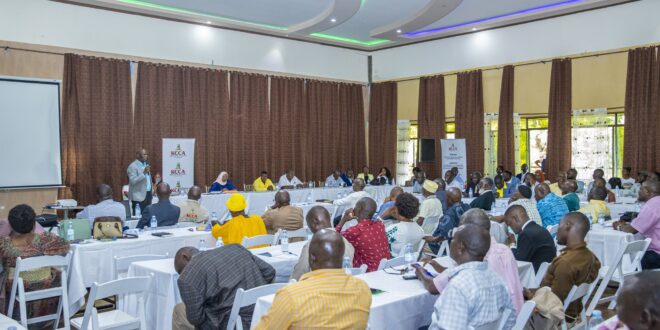
The Kampala Capital City Authority (KCCA) has stepped up efforts to improve service delivery across the capital by bringing more than 100 Local Council II (LCII) chairpersons into discussions on community needs, infrastructure development and priorities for the 2027/28 financial year. The engagement, held on October 23 at Maya Nature Resort in Wakiso District, focused on strengthening cooperation between the authority and grassroots leaders to address challenges affecting residents.
KCCA Executive Director Sharifah Buzeki said the authority recognises the importance of working closely with local leaders to build a city that responds to the everyday needs of its population. She emphasised that development must produce visible improvements in communities, including cleaner neighbourhoods, more reliable garbage collection, improved roads, better drainage systems and adequate street lighting.Buzeki explained that Kampala’s development plans are guided by key national and city policy frameworks, including the Fourth National Development Plan, the Tenfold Growth Strategy, the KCCA Strategic Plan for 2025/26–2029/30 and the National Resistance Movement manifesto. She said familiarising LCII chairpersons with these frameworks would help them understand planned government interventions, monitor programmes and communicate relevant information to residents.State Minister for Kampala Capital City and Metropolitan Affairs Kabuye Kyofatogabye congratulated the chairpersons on their election and urged them to take an active role in implementing government programmes.
He challenged the leaders to support revenue collection, monitor public projects, maintain law and order and mobilise communities to participate in initiatives intended to improve household incomes and living conditions.The minister also called on grassroots leaders to take greater responsibility for sanitation and waste management, stressing that keeping Kampala clean requires cooperation between government institutions and residents. He urged the chairpersons to help communities understand and benefit from programmes such as the Parish Development Model while promoting proper waste disposal and healthier neighbourhoods.The meeting comes as KCCA prepares its budget for the 2027/28 financial year, which has indicative funding of Sh725.445 billion, compared with Sh1.054 trillion allocated for the current financial year. The projected reduction partly reflects the expected completion of major infrastructure projects, including the African Development Bank-funded Kampala City Roads Rehabilitation Project, scheduled to end in December 2027. The projections also exclude a one-off Sh19 billion allocation for Kisekka Market.Kampala Deputy Lord Mayor Faridah Nakabugo encouraged the LCII chairpersons to mobilise residents to participate in government programmes and take advantage of available opportunities to improve their livelihoods.
The leaders also received guidance on governance reforms aimed at clarifying their responsibilities and strengthening coordination with KCCA. Farisha Namayanja, chairperson of Kazo-Angola Parish in Kawempe Division, welcomed the engagement, while Issa Semakula of Luwafu Parish in Makindye pledged to work with the authority to improve services in his community.The engagement highlights KCCA’s efforts to give grassroots leaders a stronger voice in planning, budgeting and public service delivery. By involving parish-level representatives in discussions about the city’s future, the authority hopes to ensure that decisions reflect the concerns of the people they serve. Residents will ultimately look to these efforts for tangible improvements, particularly in road conditions, drainage, sanitation, waste collection and other essential services that shape everyday life in Kampala.