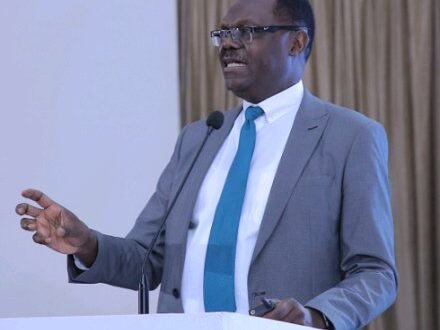
The National Social Security Fund (NSSF) has defended its controversial Shs180 billion investment in Marriott Hotel, insisting that the deal represents one of its strongest real estate investments despite the Fund securing only a 30 per cent ownership stake. NSSF Managing Director Patrick Ayota told Parliament that the investment was carefully evaluated and offers significant financial and strategic benefits to the Fund and its members.
Ayota made the remarks on Wednesday, November 4, 2026, while appearing before Parliament’s Committee on Commissions, Statutory Authorities and State Enterprises (COSASE) to respond to concerns arising from the Auditor General’s December 2025 report. The committee, chaired by Muwada Nkunyingi, sought clarification on why NSSF committed approximately US$50 million to acquire a minority stake in the hotel instead of constructing and fully owning a similar facility.During the session, Nkunyingi challenged the Fund to explain its valuation and investment decisions, particularly following public claims that the same amount of money could have been used to construct an entirely new hotel under full NSSF ownership.
He questioned whether the Fund had paid an amount exceeding the actual cost of developing the facility, demanding evidence to justify the 30 per cent stake acquired through the investment.However, Ayota maintained that the Marriott project was a strategic investment informed by research into Uganda’s tourism industry. He explained that studies conducted by NSSF revealed that tourists visiting Uganda generally spent between four and eight days in the country, compared to five to seven days in neighbouring Rwanda and Kenya. According to him, the shortage of high-quality hotels capable of accommodating large tourist groups was among the factors limiting longer stays, making the Marriott investment important to the country’s tourism sector.The NSSF boss further revealed that the Fund had spent approximately two years assessing the Marriott project before committing its money. He said the evaluation involved examining the hotel’s expected cash flows, target market, anticipated occupancy and potential returns.
Ayota disclosed that the completed hotel is expected to have a market valuation of approximately US$200 million, arguing that NSSF’s US$50 million contribution for a 30 per cent stake represented a favourable deal. He insisted that the investment process involved several layers of assessment rather than an individual making the decision independently.Despite the explanation, MPs continued questioning the basis of the valuation and whether NSSF had adequately compared Marriott with other established hotels in Kampala. Martin Muzaale, the Buzaaya County legislator, wondered how Marriott could attract such a high valuation when the historic Sheraton Hotel occupies approximately 10.56 acres of prime land in the city centre. He questioned whether the Fund had conducted sufficient market research before entering the investment, particularly considering the existing competition from established hospitality brands such as Sheraton and Serena.In response, Ayota disclosed that NSSF already owns a 20 per cent stake in Serena Hotels across the East African region, describing the Marriott investment as another major construction-related undertaking for the Fund. He challenged MPs to provide credible information regarding the reported value of Sheraton Hotel to enable NSSF make meaningful comparisons.
However, Muzaale pushed further, questioning how the Fund reportedly spent Shs8 billion to acquire its 20 per cent stake in Serena while committing Shs180 billion for only 30 per cent ownership in Marriott. He also demanded access to financial statements showing the returns generated by the Serena investment.Other legislators raised concerns about the valuation methods, financial risks and the time required for members’ savings to generate returns. Gerald Nangoli, the Elgon County MP, questioned who valued the Marriott property, whether the exercise involved government-certified valuers and whether the valuation was based on projected future earnings or actual replacement costs.

He also asked what would happen if hotel occupancy remained at 60 per cent. Julius Nakiyi, the Budadiri East MP, demanded clarification on the project’s payback period, asking Ayota to explain how long it would take NSSF to recover the Shs180 billion investment. The questions left the Fund with the task of demonstrating that the Marriott deal will deliver sustainable returns without exposing workers’ savings to unnecessary financial risks.