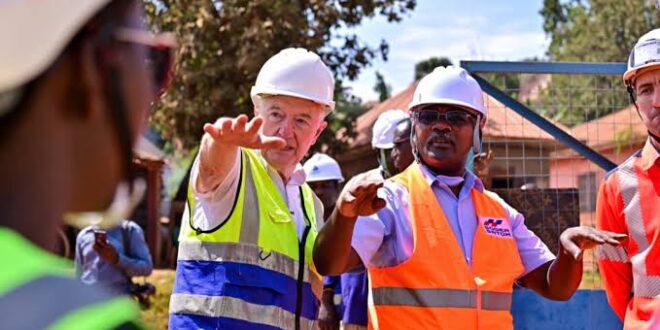
The National Water and Sewerage Corporation (NWSC) has explained why residents in parts of Greater Kampala continue to experience water supply interruptions, blaming ongoing road construction projects and unreliable electricity supply for disrupting its operations. The corporation says these challenges have made it difficult to maintain a consistent supply of water to homes, businesses and other customers.Eng. Mahmood Lutaya, the General Manager of Kampala Water at NWSC, explained that some road construction projects require existing water pipes and other utility connections to be relocated. During this process, the corporation is sometimes forced to temporarily shut down water supply as contractors work on moving the affected infrastructure, leaving some communities without water.
Lutaya identified Seeta and Namataba among the areas where ongoing infrastructure developments and pipeline relocation activities have contributed to water interruptions. He explained that although NWSC works closely with other responsible agencies and construction contractors, some disruptions cannot be avoided whenever major adjustments are made to existing water infrastructure.He acknowledged that customers should expect occasional interruptions during such projects but emphasised that the corporation is working with relevant stakeholders to reduce the inconvenience. According to him, proper coordination between NWSC and road construction agencies is necessary to ensure that infrastructure projects are completed while minimising the impact on water consumers.Apart from road construction, unreliable electricity supply has also emerged as a major challenge affecting water distribution across Greater Kampala. Lutaya revealed that NWSC operates more than 60 booster stations that depend on electricity to pump water through its distribution network. Whenever power interruptions occur at these facilities, water movement is affected, potentially leaving customers with reduced supply or no water.
He further explained that although the corporation has generators to provide backup electricity during power outages, they cannot operate continuously for 24 hours. This means prolonged electricity interruptions can still affect water distribution, making reliable power supply an important requirement for maintaining uninterrupted services.NWSC Managing Director Dr. Eng. Silver Mugisha also pointed to the absence of dedicated utility corridors as another factor contributing to infrastructure challenges. He explained that water pipes are sometimes installed underneath roads because there are no designated spaces for essential utilities. As a result, road surfaces must occasionally be cut whenever water infrastructure is installed, repaired or relocated.
He called for affected roads to be restored to their original condition or improved after the works are completed.The challenges come as NWSC rolls out its Kampala Water Forward-Looking and Optimisation of Water Supply (K-FLOWS) programme, a six-month initiative running from November 2026 to April 2027. The programme is intended to improve water reliability across Kampala and the surrounding serviced areas of Wakiso and Mukono. Residents will be hoping that the planned interventions, alongside better coordination with road construction agencies and more reliable electricity, will help reduce frequent interruptions and improve access to clean water.