The Government of Uganda, through the National Water and Sewerage Corporation (NWSC), has launched a major Shs694 billion water and sanitation project aimed at addressing persistent water shortages in the Greater Kampala Metropolitan Area. The ambitious Wakiso West Water and Sanitation Project is expected to provide more than one million people with reliable access to clean and safe drinking water, particularly in rapidly growing communities where residents have struggled with irregular water supply.
The project will draw water from Lake Victoria through a new treatment facility at Bwerenga.The project will cover Kyengera, Nsangi, Kajjansi, Kasanje, Kiringente, Wakiso Town Council and Mpigi Town Council, as well as several communities along the Entebbe Road corridor and areas between Entebbe, Masaka and Mityana roads. About 160,000 of the expected beneficiaries live in informal settlements, where access to affordable and reliable water remains a major challenge.
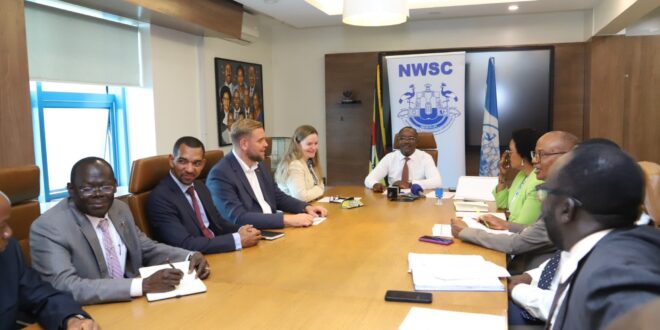
Once completed, the project is expected to significantly improve water availability for households, businesses and institutions across the targeted areas.As part of the implementation process, NWSC has signed a consultancy contract worth approximately Shs47.5 billion with a joint venture involving Danish firm NIRAS A/S and German engineering company Fichtner GmbH & Co. KG, working alongside Ugandan firms M&E Associates Ltd and Alliance Consultants Ltd. The consultants will undertake detailed engineering designs, prepare tender documents and supervise the construction works. The consultancy will be implemented in two phases, with the first phase covering designs and procurement preparations, while the second will involve construction supervision and monitoring during the defects liability period.The new Bwerenga water treatment plant will have the capacity to treat 62.5 million litres of water daily, while its intake infrastructure will be capable of drawing up to 200 million litres from Lake Victoria every day.
The project will also involve laying 94.2 kilometres of transmission pipes and 78.5 kilometres of secondary pipelines. Five reservoirs will be constructed at Kaga, Nsangi, Nanziga, Mpigi and Bukasa, with a combined storage capacity exceeding 15.25 million litres. Additional pumping stations will be established at Buloba, Katende, Maya and Ssekiwunga to improve water distribution across the service area.NWSC Managing Director Dr Silver Mugisha said the project would help address the growing demand for water in the Greater Kampala Metropolitan Area, where population growth and rapid urban development have placed increasing pressure on existing infrastructure. He explained that Kampala’s main water treatment plants at Ggaba and Katosi are located on the eastern side of the city, making it difficult to supply some western communities that have expanded significantly over the years. Areas such as Kyengera, Mutundwe, Lubowa, Buziga and Munyonyo have experienced intermittent water supply, forcing some residents to depend on alternative sources, including wells, where a 20-litre jerrycan has reportedly been selling for between Shs1,000 and Shs2,000.The project will also prioritise low-income communities through the installation of 941 community water dispensers and prepaid yard taps in selected informal settlements. These facilities will serve communities in areas including Kimbejja, Katereke, Kisozi/Kitemu, Nsangi, Kasenge, Kikajjo, Kitende, Namulanda, Ssisa and Wamala, among others. The prepaid systems are expected to make clean water more accessible and affordable while reducing the burden on families that have been forced to travel long distances or spend more money to obtain safe drinking water.
Beyond water supply, the Shs694 billion investment will address sanitation challenges through the construction of a faecal sludge treatment plant along Ssekiwunga Road in Kajjansi. The facility will have the capacity to process at least 400,000 litres of faecal sludge daily, helping reduce unsafe disposal practices and protect rivers, groundwater and other water sources from contamination. Solar installations with a combined generation capacity of at least 2,945 kilowatts will also be established at selected project sites to support sustainable energy use and reduce operational costs.The Wakiso West project is part of a wider NWSC investment programme aimed at closing the water supply gap across Greater Kampala.

Other ongoing interventions include the expansion of the Katosi water treatment plant from its current capacity of 160 million litres to 240 million litres daily and the construction of new transmission pipelines and reservoirs under Package 2B, expected to benefit about one million additional people. Nationally, NWSC currently serves an estimated 22 million people through more than one million water connections across 287 towns, with its 2025–2030 strategic plan targeting 26 million beneficiaries by 2030. Dr Mugisha said the investments demonstrate the government’s commitment to expanding access to essential water and sanitation services, protecting public health and supporting sustainable development.