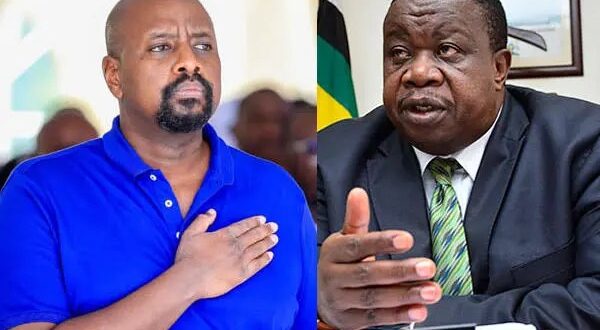
A fresh political storm has emerged in Uganda following claims that members of the Patriotic League of Uganda (PLU) want retired Major General Kahinda Otafiire removed from Cabinet and replaced by former minister Dr Elioda Tumwesigye. The controversy has drawn journalist Andrew Mwenda into the debate, with a lawyer accusing him of defending political conduct that could undermine accountability and constitutional governance. In an opinion article published by Uganda Radio Network on October 14, 2026, the writer argues that disagreements over political leadership should be settled through lawful procedures rather than threats, intimidation or the influence of powerful institutions.The author questions why Otafiire should be pushed out of Cabinet if those calling for his removal cannot present convincing evidence against his performance. He argues that political appointments should not become a battleground for individuals or groups seeking to influence Uganda’s future leadership. The reported calls for Otafiire’s replacement have also raised questions about the growing political influence associated with General Muhoozi Kainerugaba and the role of the PLU in discussions about the country’s succession politics. However, the alleged campaign to remove Otafiire has not been independently established by the information provided.Mwenda’s reported position on the controversy is another major target of the article. The writer accuses the journalist of appearing to defend Muhoozi and his political ambitions while departing from principles of accountability and freedom of expression that he previously advocated. According to the author, public commentators have a responsibility to question the conduct of powerful figures instead of excusing behaviour simply because it involves people they support. These claims reflect the author’s assessment of Mwenda’s public commentary rather than an independently established conclusion about his intentions.The lawyer also raises concerns about Mwenda’s reported treatment of threatening messages and allegations of military abuses, which he allegedly described as jokes or potentially AI-generated material. The author argues that such explanations could trivialise serious accusations and discourage scrutiny of the conduct of security agencies. He insists that claims involving threats, unlawful detention and mistreatment should be investigated using credible evidence. At the same time, determining whether particular messages are authentic or whether specific allegations are accurate requires independent verification.To support his argument, the writer refers to cases involving opposition figures and activists, including Eddie Mutwe, Mathew Bagonza and Sam Mugumya. He also mentions Dr Kizza Besigye, Kampala Lord Mayor Erias Lukwago and Miria Matembe while discussing what he describes as growing pressure on people who challenge those in power. The author uses these cases to question whether political freedoms and individual rights receive adequate protection when disputes involve powerful security institutions. The allegations concerning the individuals mentioned, however, must be considered separately and assessed on their respective evidence.The article further invokes Uganda’s 1995 Constitution, particularly Articles 1 and 208, to emphasise the sovereignty of the people and the constitutional role of the armed forces. The writer argues that Uganda’s political direction should be determined through constitutional institutions and the will of citizens rather than military influence or intimidation. He warns that allowing security institutions to become involved in political contests beyond their lawful responsibilities could weaken public confidence in civilian leadership and undermine democratic accountability.The author also draws comparisons with previous political disagreements, including the controversy surrounding former Prime Minister Amama Mbabazi, to warn against what he considers politically motivated efforts to remove leaders viewed as obstacles to particular ambitions. Although the President has constitutional powers to appoint and dismiss ministers, the writer argues that such decisions should be guided by legitimate political considerations rather than pressure from groups seeking to influence government appointments. He maintains that anyone dissatisfied with Otafiire’s performance should raise specific concerns and allow the appropriate constitutional processes to determine the matter.In his final argument, the writer calls on Muhoozi’s supporters and other political actors to leave Otafiire alone unless they have substantial evidence to challenge his record. He also challenges Mwenda to apply the principles of accountability, constitutionalism and freedom of expression consistently, regardless of the political figures involved. The dispute has consequently grown into a wider debate about the relationship between military influence, political ambition and civilian authority in Uganda. While the lawyer’s criticism raises important questions about political conduct, the claims of a coordinated campaign against Otafiire remain unverified, and Mwenda’s full response to the specific accusations was not included in the supplied material.