
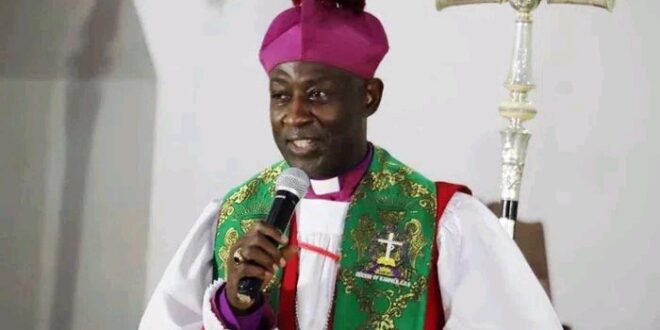
A church service led by Archbishop Stephen Kaziimba Mugalu of the Church of Uganda was thrown into chaos on Sunday in Boston when a group of demonstrators confronted the cleric during the service. The protestors, some waving Ugandan flags and sporting colors associated with the opposition National Unity Platform (NUP), accused the Archbishop of staying silent on the rampant political and human rights abuses in Uganda.
In the video that has since circulated widely on social media, the protesters, visibly angered, stood up in the middle of the service and shouted accusations at Kaziimba. “God will rebuke you,” one protester shouted, while another cried out, “How can you be silent when people are languishing in prisons?” The disruption halted the service momentarily as church security escorted some of the protesters out of the building.
The incident in Boston is believed to be linked to Archbishop Kaziimba’s recent defense of his “quiet diplomacy” approach, which he has used instead of openly challenging Uganda’s government. His comments, made during a church service in Makerere, Uganda, had already stirred controversy. When asked why he didn’t take a more aggressive stance like the late Archbishop Janani Luwum, who was killed during the regime of dictator Idi Amin, Kaziimba responded by questioning, “Do you think I can make an impact by being killed?” He emphasized that he preferred to engage government leaders behind closed doors, rather than publicly confront them.
This position has drawn sharp criticism from several public figures, particularly Bobi Wine, the leader of the opposition National Unity Platform (NUP). Bobi Wine, who is among the harshest critics of Kaziimba’s silence, recently expressed his dismay that religious leaders like the Archbishop have chosen not to stand up for the oppressed in Uganda. In a public statement in the US, Bobi Wine condemned the fear displayed by some religious figures, arguing that such inaction contradicted the example of courage set by leaders like Jesus Christ, Martin Luther King Jr., and Malcolm X.
The protest in Boston underscores a deeper discontent among Ugandans, especially within the diaspora, who are increasingly vocal about the perceived passivity of their spiritual leaders. The demonstrators’ actions reflect the frustrations of many who feel that religious figures should be more outspoken, particularly at a time when the Ugandan government faces accusations of widespread political repression, media censorship, and the imprisonment of opposition leaders.
While Kaziimba’s supporters argue that his approach of “quiet diplomacy” is rooted in wisdom and a desire to avoid harm, the growing unrest in both Uganda and abroad shows that not all agree. For many, the Archbishop’s choice to engage privately with authorities is seen as a betrayal of the social justice values that religious leaders should embody, especially in a country where dissent is often met with harsh repression.
The incident in Boston reveals the way political debates over Uganda’s leadership are increasingly spilling beyond its borders, especially within the Ugandan diaspora. As the protestors’ voices echoed through the church, it became clear that this issue is not just one of faith—it is about justice, accountability, and the moral duty of leaders to speak out against injustice, no matter the cost.
For Archbishop Kaziimba, the events in Boston have brought into sharper focus the dilemma he faces: whether to continue his “quiet diplomacy” or to take a more vocal, public stance against the Ugandan government. The protesters’ challenge was a call for action, urging him—and all religious leaders—to take a stand on the injustices they see at home.
As Ugandans around the world continue to struggle for freedom and human rights, the protest against Archbishop Kaziimba in Boston serves as a reminder that the fight for justice is far from over, and that those in positions of power—whether political or religious—must not remain silent in the face of oppression.


