
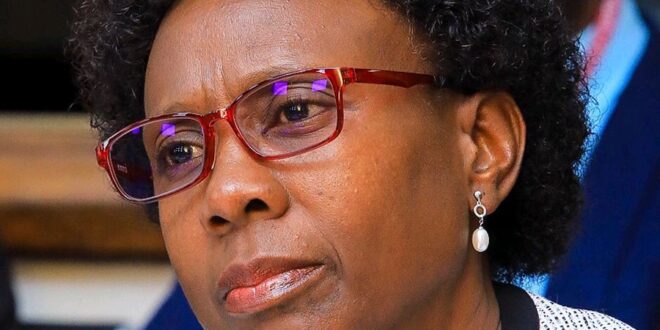
The Ugandan government has defended its ongoing reforms in medical training, insisting that the changes are necessary to improve the quality of healthcare services across the country. Health Minister Jane Ruth Aceng said the reforms are focused on producing competent, disciplined, and highly skilled health professionals who can effectively serve the growing needs of the population.
Speaking during an interview, Dr Aceng explained that the government is determined to strengthen standards in medical schools and health training institutions. She noted that while Uganda continues to expand access to medical education, quality and professionalism must remain a top priority.
Her remarks come at a time when questions have emerged from sections of the public regarding the standards of training in some institutions and the preparedness of graduates entering hospitals and clinics. Concerns have also been raised about whether all training centers have the capacity to provide adequate practical exposure to students.
According to the minister, the Ministry of Health is now working closely with universities, professional councils, and other regulatory agencies to tighten supervision and improve accreditation systems. She said authorities want to ensure that institutions fully meet the required standards before being allowed to train future health workers.
Dr Aceng emphasized that Uganda’s healthcare sector needs professionals who possess not only academic qualifications, but also strong clinical competence and ethical values. She added that government wants graduates to leave training institutions ready to handle real medical challenges with confidence and professionalism.
The minister further revealed that the reforms are also intended to align Uganda’s medical education system with international standards and modern healthcare demands. She explained that the country is entering a new phase of advanced treatment services, including organ transplant procedures, specialized cancer treatment, and intensive critical care medicine.
She stressed that such developments require highly trained personnel with specialized knowledge and hands-on experience. Because of this, government believes continuous professional development and advanced medical training must become a key part of Uganda’s health sector transformation.
Government officials maintain that strengthening medical education is one of the most important steps toward improving service delivery in hospitals and addressing the country’s shortage of skilled health workers. Authorities say the reforms may be challenging for some institutions, but they are necessary if Uganda is to build a stronger and more reliable healthcare system for the future.


