
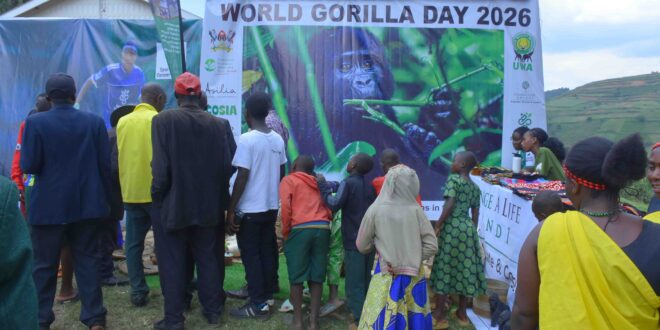
As the world marks World Gorilla Day today, Uganda is celebrating the mountain gorillas that have become one of the country’s most important tourism products and a major source of income for communities living around their natural habitat.
Deep in the forests of south-western Uganda, the mountain gorillas are more than a symbol of wildlife conservation. For communities surrounding Bwindi Impenetrable and Mgahinga Gorilla National Parks, the animals support jobs, businesses, community projects and tourism revenue.
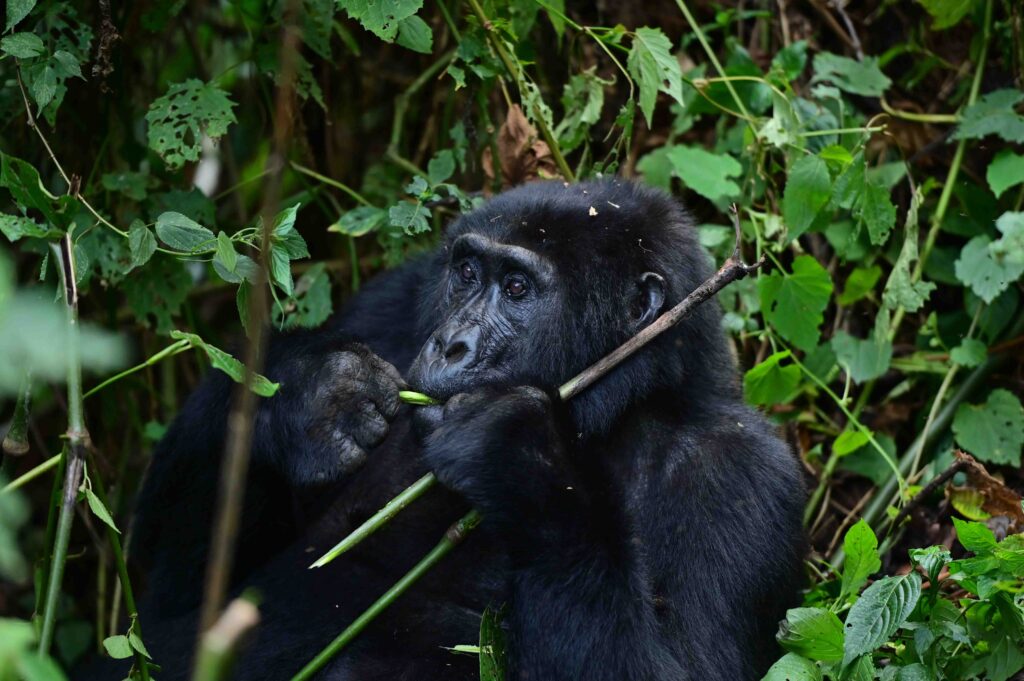
Uganda is home to more than half of the world’s remaining mountain gorillas, which are found in Bwindi and Mgahinga in south-western Uganda.
The growing popularity of the two national parks is reflected in the number of visitors. According to Bashir Hangi, the Uganda Wildlife Authority (UWA) spokesperson and Assistant Commissioner in charge of communication, Mgahinga received 3,601 international and domestic visitors in the 2021/22 financial year.
The number increased to 5,325 visitors in 2022/23, 5,507 in 2023/24 and 6,222 in 2024/25. Bwindi recorded 20,367 visitors in 2021/22 before the number increased to 37,360 in 2022/23.
Visitor numbers at Bwindi then rose to 43,984 in 2023/24 before slightly falling to 43,716 in 2024/25. Hangi, however, notes that these figures cover visitors involved in different tourism activities in the parks and should not be taken to represent gorilla trekkers alone.
Despite this, gorilla tourism continues to generate significant revenue. John Makombo, the UWA Commissioner in charge of biodiversity management, says Bwindi and Mgahinga generated a combined Sh584.3 billion in tourism revenue between the 2022/23 and 2025/26 financial years.
Of this amount, more than Sh398.8 billion came directly from gorilla tourism, while the remaining revenue was generated from other tourism activities in the two parks.
In the 2022/23 financial year, gorilla tourism contributed more than Sh109.8 billion out of the Sh147.9 billion collected. In 2023/24, gorilla tourism generated Sh86 billion out of Sh131.9 billion.
In 2024/25, gorilla tourism contributed Sh93 billion out of the Sh142 billion collected, while in 2025/26, it generated Sh110 billion out of the total Sh162.5 billion collected from the two parks.
The benefits of gorilla tourism also reach communities surrounding the parks. In the financial year ending June 2025, UWA provided Sh2.97 billion to communities around the Bwindi-Mgahinga Conservation Area for community projects, social enterprises and businesses.
This means that money spent on a gorilla experience can support many people beyond the park. Porters, guides, drivers, lodge workers, farmers and small businesses supplying the tourism sector can all benefit from the industry.
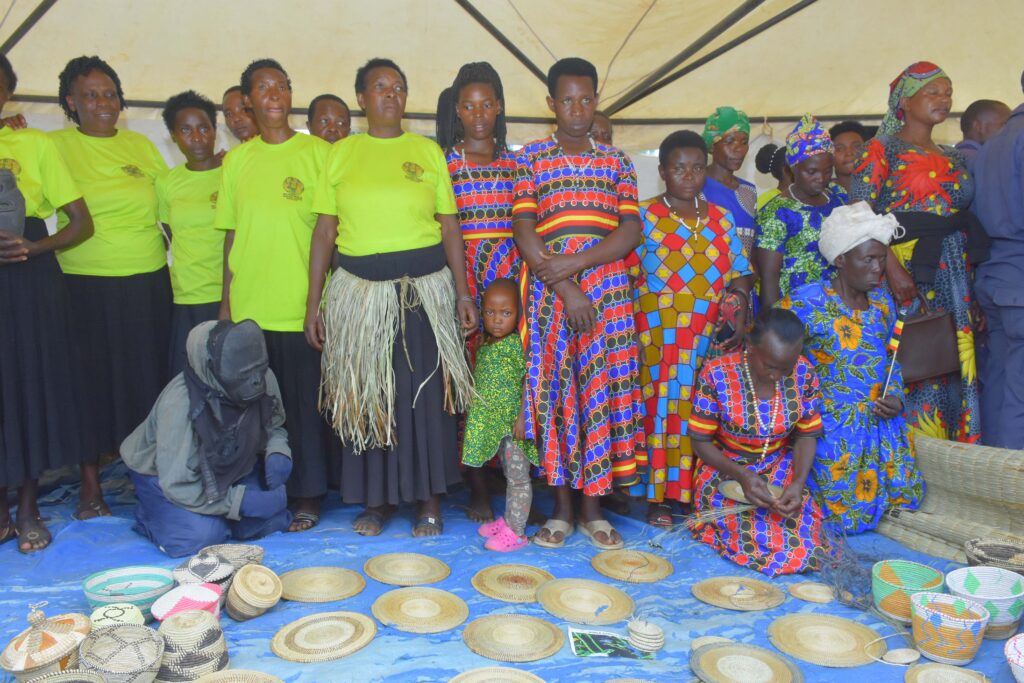
Christine Katushabe, the founder of Change A Life-Bwindi in Ruhija, Mpungu Sub-county, Kanungu District, says tourism has contributed to significant changes in communities around Bwindi.
She points to the growth of high-end lodges across Bwindi’s tourism sectors, which have created employment opportunities and markets for locally produced goods and services. She also highlights efforts to integrate Batwa communities into the predominantly Bakiga communities around Bwindi.
The link between conservation and community development was demonstrated in Ruhija this week as residents of Mpungu Sub-county participated in activities ahead of World Gorilla Day.
The activities included tree planting, community cleaning, dialogue sessions, a free medical camp and sports for conservation. More than 120 residents received free medical services provided by Rugarama Hospital.
The activities, coordinated by Katushabe with support from UWA, highlighted the importance of involving communities living around protected areas in conservation efforts while ensuring they benefit from the tourism economy.
Juliana Kagwa, the Chief Executive Officer of the Uganda Tourism Board, says mountain gorillas remain an important part of Uganda’s tourism appeal. She says many tourism arrivals can be directly attributed to the mountain gorillas.
Mountain gorillas are found only in Uganda, Rwanda and the Democratic Republic of Congo, making their protection an important responsibility shared by the three countries.
Kagwa has also called for sustainable tourism practices in Bwindi and Mgahinga while highlighting Uganda’s unique gorilla-tracking experience. At the same time, Uganda continues to diversify its tourism sector so that other attractions can complement its major wildlife products.
The story of gorilla tourism also demonstrates the wider economic value of conservation. A gorilla can generate greater value while alive than through illegal killing, while a protected forest can provide greater long-term benefits than when it is cleared.
For a community member earning income from a tourist, a farmer supplying a lodge, a porter guiding visitors through the forest or a young person employed by a tourism business, conservation can provide direct economic benefits.
World Gorilla Day therefore provides more than an opportunity to celebrate an endangered species. It also highlights the connection between wildlife conservation, tourism and the livelihoods of communities living around protected areas.
Uganda’s mountain gorillas have given the country a globally recognised tourism product. The challenge remains to keep the forests protected, ensure the gorillas continue to thrive and make sure communities living alongside them continue to benefit from conservation.


